


(Die Abbildungen müssen nicht den tatsächlichen Produkten entsprechen)

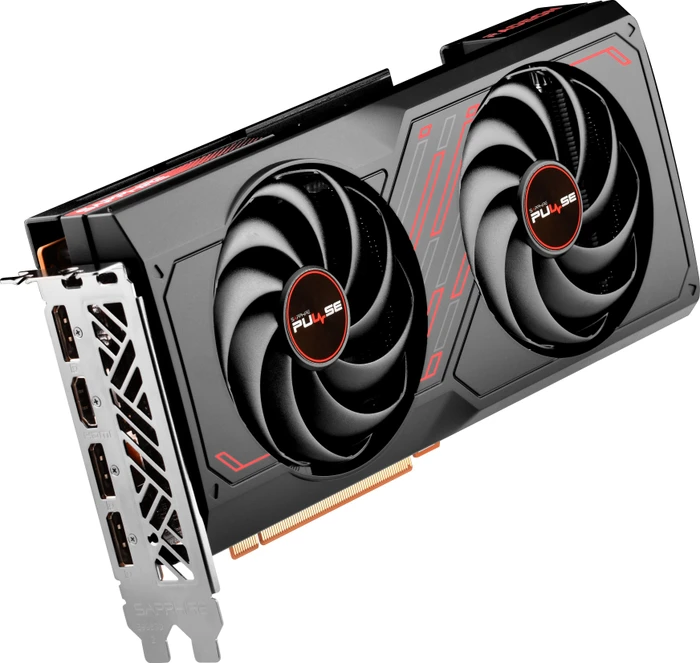
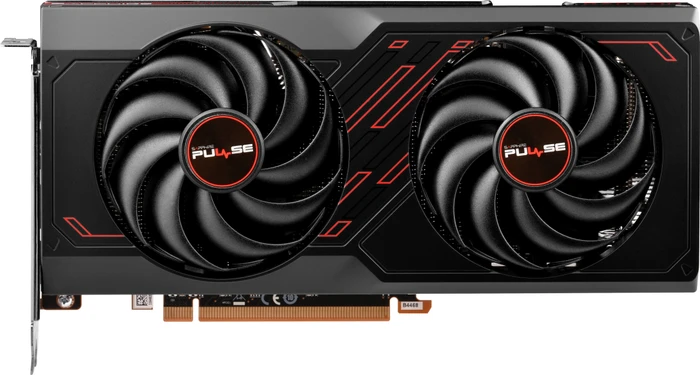
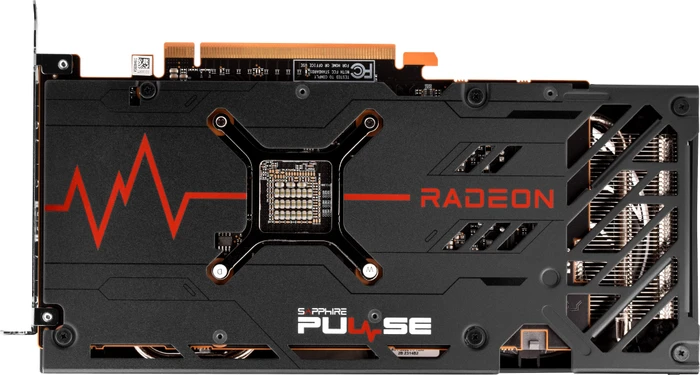
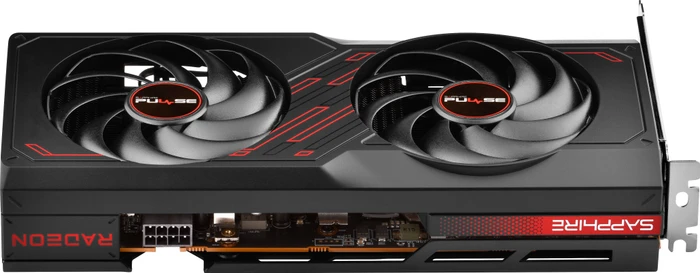
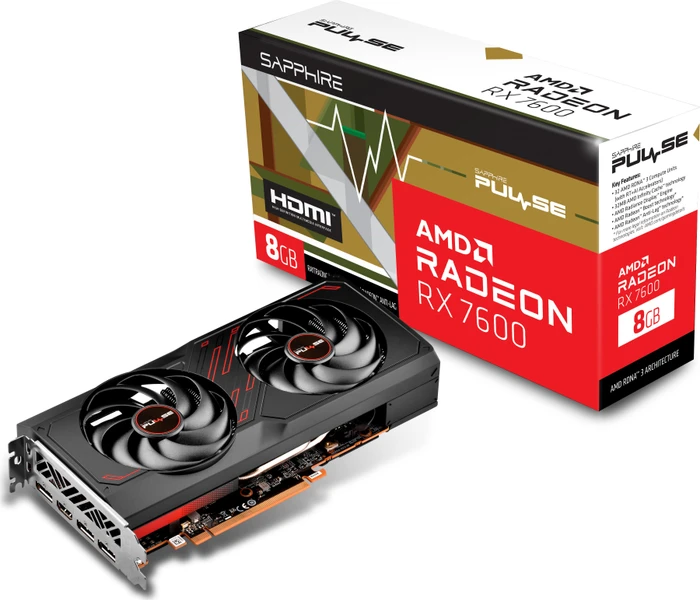
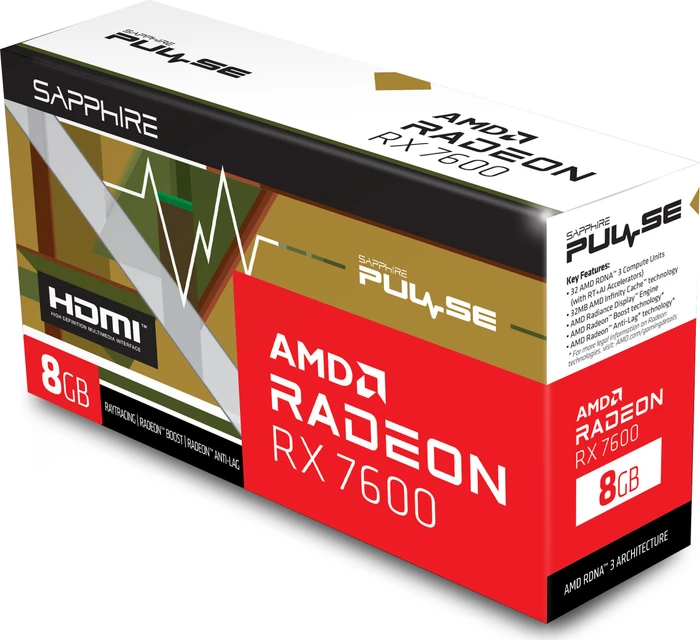
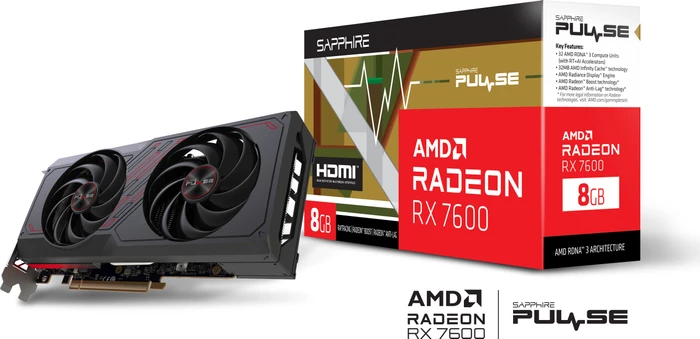


Sapphire Pulse Radeon RX 7600 OC, 8GB GDDR6, HDMI, 3x DP, lite retail
11324-01-20G
- Modell
- AMD Radeon RX 7600
- Speicher
- 8GB GDDR6, 128bit, 18Gbps, 2250MHz, 288GB/s
- Takt Basis
- 1720MHz
- Takt Boost
- 2355-2755MHz
- Übertaktung
- +100MHz Boost, +105MHz Game
- Kühlung
- 2x Axial-Lüfter (90mm)
- TDP/TGP
- 165W (AMD), max. 185W (Sapphire)
- Stromanschlüsse
- 1x 8-Pin PCIe
- Anschlüsse
- 1x HDMI 2.1, 3x DisplayPort 2.1 UHBR13.5
- Anbindung
- PCIe 4.0 x16 (x8)
- Besonderheiten
- Backplate
- Gesamthöhe
- Dual Slot




Lagernd, Lieferzeit 1-3 Werktage
Vorkasse, Kreditkarte, PayPal, Klarna € 4,99.
Lieferung nur innerhalb Deutschlands.
Lieferung nur innerhalb Deutschlands.
SAPPHIRE 11324-01-20G
SAPPHIRE PULSE AMD Radeon RX 7600 8G
SAPPHIRE PULSE AMD Radeon RX 7600 8G
Preis vom:
(Preis kann jetzt höher sein!)
(Preis kann jetzt höher sein!)



Lagernd, Lieferung 1-2 Werktage
Stand:
Stand:
Vorkasse, Kreditkarte, PayPal, Klarna € 8,90.
Expressversand ab € 16,90 möglich.
Lieferung nur innerhalb Deutschlands.
Expressversand ab € 16,90 möglich.
Lieferung nur innerhalb Deutschlands.
Sapphire 11324-01-20G
8GB Sapphire Radeon RX 7600 Gaming Pulse Aktiv PCIe 4.0 x16 (x8) (Retail)
8GB Sapphire Radeon RX 7600 Gaming Pulse Aktiv PCIe 4.0 x16 (x8) (Retail)
Preis vom:
(Preis kann jetzt höher sein!)
(Preis kann jetzt höher sein!)

Auf Lager, sofort versandfertig Lieferzeit 1-2 Werktage
Vorkasse € 5,99 minus € 1,83 Rabatt.
Kreditkarte, PayPal € 5,99.
Lieferung in weitere Länder möglich.
Kreditkarte, PayPal € 5,99.
Lieferung in weitere Länder möglich.
SAPPHIRE 11324-01-20G
Sapphire Pulse AMD Radeon RX 7600 8 GB
Sapphire Pulse AMD Radeon RX 7600 8 GB
Preis vom:
(Preis kann jetzt höher sein!)
(Preis kann jetzt höher sein!)

Auf Lager, sofort versandfertig Lieferzeit 1-2 Werktage
Vorkasse € 5,99 minus € 1,83 Rabatt.
Kreditkarte, PayPal, Klarna € 5,99.
Lieferung in weitere Länder auf Anfrage.
Kreditkarte, PayPal, Klarna € 5,99.
Lieferung in weitere Länder auf Anfrage.
SAPPHIRE 11324-01-20G
Sapphire Pulse AMD Radeon RX 7600 8 GB Grafikkarte 8 GB, 11324-01-20G
Sapphire Pulse AMD Radeon RX 7600 8 GB Grafikkarte 8 GB, 11324-01-20G
Preis vom:
(Preis kann jetzt höher sein!)
(Preis kann jetzt höher sein!)

lagernd, 24-h Service möglich
Kreditkarte € 7,99.
Lieferung nur innerhalb Deutschlands.
Finanzierung möglich.
Lieferung nur innerhalb Deutschlands.
Finanzierung möglich.
Sapphire 11324-01-20G
Sapphire Radeon RX 7600 8GB Pulse Gaming Grafikkarte
Sapphire Radeon RX 7600 8GB Pulse Gaming Grafikkarte
Preis vom:
(Preis kann jetzt höher sein!)
(Preis kann jetzt höher sein!)

Onlineshop: lagernd, 24-h Service möglich, Lieferung 2-3 Werktage
Hannover/Laatzen: lagernd (keine Online-Reservierung möglich)
Berlin, Dortmund, Düsseldorf, Hamburg, München, Stuttgart: nicht lagernd
Stand:
Hannover/Laatzen: lagernd (keine Online-Reservierung möglich)
Berlin, Dortmund, Düsseldorf, Hamburg, München, Stuttgart: nicht lagernd
Stand:
Vorkasse, Kreditkarte, PayPal, Klarna € 8,99.
Finanzierung möglich.
Abholung in den Filialen möglich.
Lieferung in weitere Länder auf Anfrage.
Expressversand möglich.
Finanzierung möglich.
Abholung in den Filialen möglich.
Lieferung in weitere Länder auf Anfrage.
Expressversand möglich.
Sapphire 11324-01-20G
Sapphire Radeon RX 7600 8GB Pulse Gaming Grafikkarte
Sapphire Radeon RX 7600 8GB Pulse Gaming Grafikkarte
Preis vom:
(Preis kann jetzt höher sein!)
(Preis kann jetzt höher sein!)

5-9 Werktage
Kreditkarte, PayPal
GRATISVERSAND.
Lieferung nur innerhalb Deutschlands.
Ratenzahlung möglich.
GRATISVERSAND.
Lieferung nur innerhalb Deutschlands.
Ratenzahlung möglich.
Sapphire 11324-01-20G
Sapphire PULSE AMD Radeon RX 7600 (8 GB, GDDR6) (11324-01-20G) Schwarz/Grau
Sapphire PULSE AMD Radeon RX 7600 (8 GB, GDDR6) (11324-01-20G) Schwarz/Grau
Preis vom:
(Preis kann jetzt höher sein!)
(Preis kann jetzt höher sein!)


1-3 Werktage
Vorkasse, PayPal
GRATISVERSAND.
Lieferung nur innerhalb Deutschlands.
GRATISVERSAND.
Lieferung nur innerhalb Deutschlands.
Sapphire 11324-01-20G
Sapphire Radeon RX 7600 Gaming Pulse OC 8GB GDDR6 HDMI 3x DP
Sapphire Radeon RX 7600 Gaming Pulse OC 8GB GDDR6 HDMI 3x DP
Preis vom:
(Preis kann jetzt höher sein!)
(Preis kann jetzt höher sein!)

Verfügbar - 4-6 Werktage Lieferzeit
Vorkasse, Kreditkarte, PayPal, Klarna € 5,99.
Lieferung nur innerhalb Deutschlands.
Lieferung nur innerhalb Deutschlands.
Sapphire 11324-01-20G
Sapphire Radeon RX 7600 Pulse - 8GB GDDR6 RAM - Grafikkarte
Sapphire Radeon RX 7600 Pulse - 8GB GDDR6 RAM - Grafikkarte
Preis vom:
(Preis kann jetzt höher sein!)
(Preis kann jetzt höher sein!)

2-4 Tage
Vorkasse, Nachnahme, Kreditkarte, PayPal, Klarna € 6,90.
Finanzierung € 6,90.
Lieferung in weitere Länder auf Anfrage.
Finanzierung € 6,90.
Lieferung in weitere Länder auf Anfrage.
sapphire 11324-01-20G
sapphire Pulse Radeon RX 7600 OC 8GB GDDR6 lite retail - 11324-01-20G
sapphire Pulse Radeon RX 7600 OC 8GB GDDR6 lite retail - 11324-01-20G
Preis vom:
(Preis kann jetzt höher sein!)
(Preis kann jetzt höher sein!)

lagernd
Kreditkarte, PayPal
GRATISVERSAND.
GRATISVERSAND.
Sapphire 11324-01-20G
Sapphire Pulse AMD Radeon RX 7600 8 GB schwarz
Sapphire Pulse AMD Radeon RX 7600 8 GB schwarz
Preis vom:
(Preis kann jetzt höher sein!)
(Preis kann jetzt höher sein!)
4 weitere Angebote von eBay.de weniger Angebote von eBay.de
Nicht gruppierenlagernd
Kreditkarte, PayPal
GRATISVERSAND.
GRATISVERSAND.
Sapphire 11324-01-20G
8GB Sapphire Pulse Radeon RX7600 OC lite retail GDR6 AMD PCIe 4.0 x16
8GB Sapphire Pulse Radeon RX7600 OC lite retail GDR6 AMD PCIe 4.0 x16
Preis vom:
(Preis kann jetzt höher sein!)
(Preis kann jetzt höher sein!)
lagernd
Kreditkarte, PayPal
GRATISVERSAND.
GRATISVERSAND.
Sapphire 11324-01-20G
8GB Sapphire Pulse Radeon RX7600 OC lite retail GDR6 AMD PCIe 4.0 x16
8GB Sapphire Pulse Radeon RX7600 OC lite retail GDR6 AMD PCIe 4.0 x16
Preis vom:
(Preis kann jetzt höher sein!)
(Preis kann jetzt höher sein!)
Lieferzeit 3-7 Werktage
Kreditkarte, PayPal
GRATISVERSAND.
GRATISVERSAND.
Sapphire 11324-01-20G
SAPPHIRE RX 7600 PULSE GAMING OC, Grafikkarte RDNA 3, GDDR6, 3x DisplayPort, 1x
SAPPHIRE RX 7600 PULSE GAMING OC, Grafikkarte RDNA 3, GDDR6, 3x DisplayPort, 1x
Preis vom:
(Preis kann jetzt höher sein!)
(Preis kann jetzt höher sein!)
lagernd
Kreditkarte, PayPal
GRATISVERSAND.
GRATISVERSAND.
Sapphire 11324-01-20G
Sapphire PULSE AMD RADEON RX 7600 8.192 MB GDDR6
Sapphire PULSE AMD RADEON RX 7600 8.192 MB GDDR6
Preis vom:
(Preis kann jetzt höher sein!)
(Preis kann jetzt höher sein!)

lagernd, begrenzte Stückzahl
Vorkasse, PayPal, Lastschrift € 5,95.
Nachnahme € 9,95.
Finanzierung möglich.
Lieferung weltweit möglich.
Abholung im Ladengeschäft möglich (D-26452 Sande)
Nachnahme € 9,95.
Finanzierung möglich.
Lieferung weltweit möglich.
Abholung im Ladengeschäft möglich (D-26452 Sande)
SAPPHIRE 11324-01-20G
SAP 11324-01-20G - Sapphire Pulse Radeon RX 7600 8GB
SAP 11324-01-20G - Sapphire Pulse Radeon RX 7600 8GB
Preis vom:
(Preis kann jetzt höher sein!)
(Preis kann jetzt höher sein!)

Ab Lager lieferbar - Lieferzeit 2-4 Werktage
Vorkasse, PayPal, Klarna ab € 5,95.
Lieferung in weitere Länder auf Anfrage.
Lieferung in weitere Länder auf Anfrage.
Sapphire 11324-01-20G
Sapphire Pulse Radeon RX 7600 - Grafikkarte
Sapphire Pulse Radeon RX 7600 - Grafikkarte
Preis vom:
(Preis kann jetzt höher sein!)
(Preis kann jetzt höher sein!)


Versandlager: Lieferzeit 1-2 Tage
Superstore Siegburg: nicht lagernd
Stand:
Superstore Siegburg: nicht lagernd
Stand:
Vorkasse, PayPal ab € 8,-.
Lieferung in weitere Länder auf Anfrage.
Abholung möglich (D-53721 Siegburg)
Lieferung in weitere Länder auf Anfrage.
Abholung möglich (D-53721 Siegburg)
Sapphire 11324-01-20G
Sapphire Pulse Radeon RX 7600 - Grafikkarte
Sapphire Pulse Radeon RX 7600 - Grafikkarte
Preis vom:
(Preis kann jetzt höher sein!)
(Preis kann jetzt höher sein!)

Die angezeigten Preise sind nur bei direktem Einstieg über diese Seite gültig
Sofort verfügbar, Lieferzeit max. 1-2 Werktage
Kreditkarte, PayPal, Klarna
GRATISVERSAND.
Lieferung in weitere Länder auf Anfrage.
GRATISVERSAND.
Lieferung in weitere Länder auf Anfrage.
Sapphire 11324-01-20G
VGA SAPPHIRE Pulse RADEON RX 7600 8GB Gaming GDDR6 (UEFI) (11324-01-20G)
VGA SAPPHIRE Pulse RADEON RX 7600 8GB Gaming GDDR6 (UEFI) (11324-01-20G)
Preis vom:
(Preis kann jetzt höher sein!)
(Preis kann jetzt höher sein!)

Online-Shop (Versand): auf Lager
Augsburg, Esslingen, Fellbach, Frankfurt, Heidelberg, Heilbronn, Karlsruhe, Lagerverkauf Magstadt, Ludwigsburg, Mannheim, Nürnberg, Reutlingen, Stuttgart, Ulm: 4-6 Werktage nach Bestelleingang
Stand:
Augsburg, Esslingen, Fellbach, Frankfurt, Heidelberg, Heilbronn, Karlsruhe, Lagerverkauf Magstadt, Ludwigsburg, Mannheim, Nürnberg, Reutlingen, Stuttgart, Ulm: 4-6 Werktage nach Bestelleingang
Stand:
Vorkasse, Kreditkarte, PayPal € 6,99.
Finanzierung möglich.
Lieferung in weitere Länder auf Anfrage.
Abholung in den Filialen möglich
Finanzierung möglich.
Lieferung in weitere Länder auf Anfrage.
Abholung in den Filialen möglich
Sapphire 11324-01-20G
Sapphire Pulse Radeon RX 7600 OC, 8GB (11324-01-20G)
Sapphire Pulse Radeon RX 7600 OC, 8GB (11324-01-20G)
Preis vom:
(Preis kann jetzt höher sein!)
(Preis kann jetzt höher sein!)

Auf Lager, sofort versandfertig Lieferzeit 1-2 Werktage
Vorkasse, Kreditkarte, PayPal, Klarna
GRATISVERSAND.
Finanzierung möglich.
Abholung nach Vereinbarung möglich (D-32312 Lübbecke)
GRATISVERSAND.
Finanzierung möglich.
Abholung nach Vereinbarung möglich (D-32312 Lübbecke)
Sapphire 11324-01-20G
Sapphire PULSE 11324-01-20G Grafikkarte AMD Radeon RX 7600 8 GB GDDR6
Sapphire PULSE 11324-01-20G Grafikkarte AMD Radeon RX 7600 8 GB GDDR6
Preis vom:
(Preis kann jetzt höher sein!)
(Preis kann jetzt höher sein!)

Zentrallager: Auf Lager
Vorkasse, Kreditkarte, PayPal
GRATISVERSAND.
Lieferung nur innerhalb Deutschlands.
GRATISVERSAND.
Lieferung nur innerhalb Deutschlands.
Sapphire 11324-01-20G
Sapphire PULSE AMD RADEON RX 7600 8.192 MB GDDR6 (11324-01-20G)
Sapphire PULSE AMD RADEON RX 7600 8.192 MB GDDR6 (11324-01-20G)
Preis vom:
(Preis kann jetzt höher sein!)
(Preis kann jetzt höher sein!)




Versandlager: ca. 2-3 Werktagen versandbereit, Lieferzeit 3-4 Werktage
Linz, Salzburg, Wels: 2-3 Werktage
Zentrale Timelkam: ca. 2 Werktage
Dornbirn, Graz Nord, Graz Süd, Innsbruck, Klagenfurt, Wien 20, Wien 3, Wr. Neustadt: 1 Woche
Stand:
Linz, Salzburg, Wels: 2-3 Werktage
Zentrale Timelkam: ca. 2 Werktage
Dornbirn, Graz Nord, Graz Süd, Innsbruck, Klagenfurt, Wien 20, Wien 3, Wr. Neustadt: 1 Woche
Stand:
Vorkasse, Kreditkarte, PayPal
GRATISVERSAND
minus € 2,10 Rabatt bei Vorkasse.
Abholung in den Filialen möglich.
GRATISVERSAND
minus € 2,10 Rabatt bei Vorkasse.
Abholung in den Filialen möglich.
Sapphire 11324-01-20G
SAPPHIRE Pulse Radeon RX 7600 OC, 8GB GDDR6
SAPPHIRE Pulse Radeon RX 7600 OC, 8GB GDDR6
Preis vom:
(Preis kann jetzt höher sein!)
(Preis kann jetzt höher sein!)


Versandbereit: Lieferzeit 4-6 Werktage
Vorkasse, Kreditkarte, PayPal, Klarna
GRATISVERSAND
minus € 2,11 Rabatt bei Vorkasse.
GRATISVERSAND
minus € 2,11 Rabatt bei Vorkasse.
SAPPHIRE 11324-01-20G
Sapphire PULSE AMD RADEON RX 7600 - 8.192 MB
Sapphire PULSE AMD RADEON RX 7600 - 8.192 MB
Preis vom:
(Preis kann jetzt höher sein!)
(Preis kann jetzt höher sein!)



Filiale VIO Plaza Wien 1 Woche
Filiale Innsbruck: 1 Woche
Filiale Klagenfurt: 1 Woche
Versandlager: ca. 2-3 Werktagen versandbereit, Lieferzeit 3-4 Werktage
Stand:
Filiale Innsbruck: 1 Woche
Filiale Klagenfurt: 1 Woche
Versandlager: ca. 2-3 Werktagen versandbereit, Lieferzeit 3-4 Werktage
Stand:
Vorkasse, Kreditkarte, EPS
GRATISVERSAND
minus € 2,12 Rabatt bei Vorkasse.
Lieferung in weitere Länder auf Anfrage.
0%-Finanzierung möglich.
Abholung möglich (A-1120 Wien, A-6176 Völs, A-9020 Klagenfurt)
Wunschtermin-Zustellung in Wien möglich
GRATISVERSAND
minus € 2,12 Rabatt bei Vorkasse.
Lieferung in weitere Länder auf Anfrage.
0%-Finanzierung möglich.
Abholung möglich (A-1120 Wien, A-6176 Völs, A-9020 Klagenfurt)
Wunschtermin-Zustellung in Wien möglich

Sapphire 11324-01-20G
SAPPHIRE Pulse Radeon RX 7600 OC, 8GB GDDR6
SAPPHIRE Pulse Radeon RX 7600 OC, 8GB GDDR6
Preis vom:
(Preis kann jetzt höher sein!)
(Preis kann jetzt höher sein!)

Im Außenlager verfügbar | 2 - 4 Werktage
Vorkasse € 6,99 minus € 8,66 Skonto.
PayPal € 6,99.
Lieferung nur innerhalb Deutschlands.
Abholung nach Online-Bestellung möglich (D-38226 Salzgitter)
PayPal € 6,99.
Lieferung nur innerhalb Deutschlands.
Abholung nach Online-Bestellung möglich (D-38226 Salzgitter)
SAPPHIRE 11324-01-20G
Sapphire Pulse Radeon RX 7600 OC, 8GB GDDR6, HDMI, 3x DP, lite retail
Sapphire Pulse Radeon RX 7600 OC, 8GB GDDR6, HDMI, 3x DP, lite retail
Preis vom:
(Preis kann jetzt höher sein!)
(Preis kann jetzt höher sein!)

Sofort verfügbar, Lieferzeit max. 1-3 Werktage
Vorkasse, Kreditkarte, PayPal, Klarna € 6,99.
0%-Finanzierung ab € 100,- Warenwert möglich.
Abholung nach Online-Bestellung möglich (D-09603 Siebenlehn)
0%-Finanzierung ab € 100,- Warenwert möglich.
Abholung nach Online-Bestellung möglich (D-09603 Siebenlehn)
SAPPHIRE 11324-01-20G
SAPPHIRE AMD Radeon RX 7600 PULSE GAMING Grafikkarte 8 GB
SAPPHIRE AMD Radeon RX 7600 PULSE GAMING Grafikkarte 8 GB
Preis vom:
(Preis kann jetzt höher sein!)
(Preis kann jetzt höher sein!)


Sofort lieferbar, Lieferzeit max. 1-3 Werktage
Vorkasse, Kreditkarte, PayPal € 6,99.
Express möglich ab € 18,99.
Lieferung in weitere Länder auf Anfrage.
Express möglich ab € 18,99.
Lieferung in weitere Länder auf Anfrage.
SAPPHIRE 11324-01-20G
SAPPHIRE AMD Radeon RX 7600 PULSE GAMING Grafikkarte 8 GB
SAPPHIRE AMD Radeon RX 7600 PULSE GAMING Grafikkarte 8 GB
Preis vom:
(Preis kann jetzt höher sein!)
(Preis kann jetzt höher sein!)

Berlin-Mitte, Bochum, Dortmund, Dresden-Elbepark, Dresden-Waldschlösschen, Hamburg, Leipzig: nicht lagernd, voraussichtlich abholbereit in 3 bis 10 Tagen
Stand:
Stand:
Bei Online-Bestellungen erfolgt die Zustellung aus dem Zentrallager.
Kreditkarte/EC-Karte bei Abholung möglich.
0%-Finanzierung ab € 150,- Warenwert möglich.
Preis bei Kauf & Mitnahme im Store
Kreditkarte/EC-Karte bei Abholung möglich.
0%-Finanzierung ab € 150,- Warenwert möglich.
Preis bei Kauf & Mitnahme im Store
SAPPHIRE 11324-01-20G
SAPPHIRE AMD Radeon RX 7600 PULSE GAMING Grafikkarte 8 GB
SAPPHIRE AMD Radeon RX 7600 PULSE GAMING Grafikkarte 8 GB
Preis vom:
(Preis kann jetzt höher sein!)
(Preis kann jetzt höher sein!)
Lieferbar
Vorkasse ab € 12,50.
Abholung nach Vereinbarung möglich (A-5020 Salzburg)
Abholung nach Vereinbarung möglich (A-5020 Salzburg)
Sapphire 11324-01-20G
Sapphire Pulse Radeon RX 7600 - Grafikkarte
Sapphire Pulse Radeon RX 7600 - Grafikkarte
Preis vom:
(Preis kann jetzt höher sein!)
(Preis kann jetzt höher sein!)
- Modell
- AMD Radeon RX 7600
- Speicher
- 8GB GDDR6, 128bit, 18Gbps, 2250MHz, 288GB/s
- Takt Basis
- 1720MHz
- Takt Boost
- 2355-2755MHz
- Übertaktung
- +100MHz Boost, +105MHz Game
- Kühlung
- 2x Axial-Lüfter (90mm)
- TDP/TGP
- 165W (AMD), max. 185W (Sapphire)
- Stromanschlüsse
- 1x 8-Pin PCIe
- Anschlüsse
- 1x HDMI 2.1, 3x DisplayPort 2.1 UHBR13.5
- Anbindung
- PCIe 4.0 x16 (x8)
- Besonderheiten
- Backplate
- Gesamthöhe
- Dual Slot
- Abmessungen
- 240x107.1x44.07mm (LxBxH)
- Bauform
- PCIe-Karte (full height)
- Slotblende
- full height
- GPU-Rechenleistung
- 45.88 TFLOPS (FP16), 22.94 TFLOPS (FP32), 1.43 TFLOPS (FP64)
- Chip-Daten
- Chip-Architektur
- AMD RDNA 3 (ab 2022/Q4)
- Chip-Bezeichnung
- Navi 33 (Navi 33 XL)
- Chip-Ausbau
- Vollausbau (32/32 CU)
- Chip-Konfiguration
- 32CU (2048SP/128TMU/64ROP), 32 RT-Cores, 2MiB L2-Cache
- Chip-Fertigung
- TSMC 6nm (6nm)
- Chip-Größe
- 204mm², monolithisch, 13.3 Mrd. Transistoren
- Chip-Funktionen
- Raytracing, AMD Infinity Cache (32MiB), HDCP 2.3
- Chip-Verwendung
- Radeon RX 7600 XT
Radeon RX 7600
Radeon RX 7400
Radeon PRO W7600
Radeon PRO W7500 - API-Unterstützung
- DirectX 12 Ultimate (12_2) / Vulkan 1.3 / OpenCL 2.2 / OpenGL 4.6 / Shader Model 6.7
- Transcoding-Engine
- VCN 4.0, Info
- Encoding
- AV1, H.265, H.264
- Decoding
- AV1, H.265, H.264, VP9
- Multi-GPU-Anbindung
- -
- Veröffentlichung (Serie)
- 24.05.2023, UVP: 269 USD (AMD)
- Grafik
- AMD Radeon RX 7600 - 8GB GDDR6 - Desktop
- Letztes Preisupdate
- Gelistet seit
- 25.05.2023, 13:55
-
Stand: 25.05.2023 .jpg [128.42 KB]

Laden ...
20 Bewertungen für Sapphire Pulse Radeon RX 7600 OC, 8GB GDDR6, HDMI, 3x DP, lite retail
Teilen Sie uns Ihre Meinung zu Sapphire Pulse Radeon RX 7600 OC, 8GB GDDR6, HDMI, 3x DP, lite retail mit oder lesen Sie die Bewertungen unserer Mitglieder, Experten und anderer Websites zu dessen Varianten.Laden ...
-

-
kitguru.net: Sapphire RX 7600 Pulse Review (translate)Originalwertung: 7.5/10
Following on from the recent launch of AMD's RX 7600 GPU, today we take a look at the Sapphire Pulse partner card. The Pulse series has firmly established itself as a bang-for-buck favourite since its inception in 2017 and that looks to be no different for this RX 7600 model. Hitting the market at £259.99, it's an MSRP card that offers a factory overclock, dual-fan cooler and metal backplate. Today we find out how it compares against AMD's reference design.

-
custompc.com: Sapphire Pulse AMD Radeon RX 7600 review - a $269 GPU wonder! (translate)Originalwertung: 84/100
Solid 1,920 x 1,080 gaming performance for a fantastic price. You no longer need a small fortune to buy a half-decent graphics card. Thank you, AMD.
-
club386.com: Sapphire Radeon RX 7600 Pulse Gaming OC review: mainstream value (translate)Originalwertung: 4/5
Sapphire does its usual efficient and highly professional job when translating an AMD GPU into a finished card. We expect nothing less, so if you have around £250 to spend on the next graphics upgrade and are coming from significantly older cards in desperate need of a performance hike, Radeon RX 7600 Pulse Gaming OC puts itself centre stage. Satisfying to see value to the fore at launch, isn’t it?
-
 computerbase.de: B580 vs. RTX 4060 & RX 7600 auf drei CPUs mit 4–24 Kernen
Intels Grafikkarten der Battlemage-Serie alias Arc B580 und B570 verlieren auf kleineren/älteren CPUs mehr Leistung als die direkten Konkurrenten GeForce RTX 4060 und Radeon RX 7600 XT, das haben „CPU-Overhead-Tests“ auf AMD Ryzen gezeigt. Dieser Test mit Intel-Core-CPUs von 4 bis 24 Kernen bestätigt die Probleme.

-
guru3d.com: Sapphire Radeon RX 7600 PULSE review (translate)
Sapphire's Pulse Radeon RX 7600 has been launched, targeting gamers using Full HD monitors. The 8GB model, priced at $269, is tailored for low-resolution gaming environments. The question remains: does it offer good value for money? The primary goal of the Radeon RX 7600 is to provide performance at lower resolutions. With the official launch of the Radeon RX 7600 is slated for May 25th, coinciding with the release date of Nvidia's GeForce RTX 4060 (Ti) 8GB. The gaming community eagerly awaited the release of AMD's graphics card, eager to discover its potential and performance capabilities. The AMD Radeon RX 7600 boasts a robust RDNA 3 GPU and is equipped with 8GB of memory. This combination holds the promise of delivering gaming performance within its respective price range.

-
overclock3d.net: AMD Radeon RX 7600 and Sapphire RX 7600 Pulse Review (translate)
The very nature of our job means that we've seen the very best hardware that money can buy, and whilst it would be considered easy to become snooty and snobbish like certain sections of the internet, we're also highly aware of the importance of getting value for money. Nobody becomes a freelance writer because the pay is good. Thus it might be considered damning with faint praise to talk about other considerations but know that we mean what we say from the heart, as always, and wouldn't tell you something just because it sounds good, or because we've been sent something. We pride ourselves on our impartiality, and when it comes to products that aren't going to be brought by those with deep pockets without a care for what we believe that impartiality is of the utmost importance. Any new graphics card purchase is a big investment. What strikes us most about the Radeon RX 7600 is how flipping good it is, almost regardless of what we threw at it. You barely have to go back to the 5000 series, and indeed a handful of the 6000 series, to know that unless you brought one of the very top tier Radeon cards you were going to be left, if not disappointed as such, then at least not blown away. The RX 7600 blew us away, with a few tiny caveats. The elephant in the room is, of course, ray tracing. It's still a bit of a weakness of the Radeon cards, but it took Nvidia three generations to get it right and we aren't remotely surprised that AMD used the majority of the R&D time in making their RDNA architecture work well across a broad spectrum of titles, particularly as ray tracing is still, four years later, a bit of a rare find in most AAA titles, let alone the majority of games out there. However, with the RNDA 3 and the new FSR 2.1, AMD are really getting close. Quite how close they've got in a short space of time is worthy of respect, especially when it wasn't that long ago - pre RDNA - that they seemed like a spent force in the graphics card world. Speaking of FSR 2.1, that's absolutely the cornerstone of the development path they're on, and we think they have an ace in the pack that might end up making it the dominant technology when it comes to getting high FPS without compromising image quality too much. Nvidia's DLSS 3 technology does it brilliantly, as we saw on their 4000 series cards, but whilst that is a proprietary technology, FidelityFX Super Resolution (FSR) is open source. Anyone can use it on their titles, it isn't even card specific. Want to use it on your GeForce? Go ahead. Like any technology tied to a brand - PhysX, Apple's endless charging port changes, Shutter based 3DTVs etc - the winner will always be the technology that works on the largest number of systems, and as you saw from our testing results even the 32 CU RDNA 3 architecture on the Radeon RX 7600 has enough horsepower to get the job done, with massive FPS boosts in compatible titles. With seriously aggressive pricing, and performance that is more than a match for the high-selling RTX 3060 whilst also comfortably besting its forebear the RX 6600, the latest Radeon RX 7600 is the perfect card if you want to be gaming on a budget without having to limit yourself to pixel-art Indies and ancient old 3D games. It is good without FSR, but with it it becomes fantastic value for money.
-
lanoc.org: Sapphire RX 7600 Pulse (translate)
After already taking a look at the AMR Radeon RX 7600 reference card, I was impressed with the pricing and the overall gaming performance but the reference design left a lot to be desired when it came to the cooling performance. Sapphire’s RX 7600 Pulse is the perfect follow-up to that coverage because it comes in at the same price point but you get a slight overclock and a different cooler design. I will be in the minority in that I do still prefer the all-metal cooler design over the Pulse for styling, but the Pulse isn’t far off. Sapphire blacked the cooler out for the most part except for a few red accents on the front and back of the card. The RX 7600 Pulse skips RGB lighting and keeps the focus on performance, which it has. Like the reference card, the RX 7600 Pulse has great performance, especially at 1080p in gaming. It was surprisingly close to the RTX 3060 Ti in performance at 1080p which came as a surprise. The overclock helped it gain an extra FPS over the reference card but it did cost it more on the power efficiency which the RX 7600 was already struggling with. Sapphire made all of that up with cooling they could keep the RX 7600 running cool. The RX 7600 Pulse has a standard 8-pin PCIe power connection as well which should save you from having to upgrade your power supply to an ATX 3.0 power supply for a while longer. Like with the reference card, the RX 7600 Pulse struggled when it came to the compute tests, this just isn’t the ideal card if you are hoping to game and also render in Blender. Its overall power usage wasn’t high at all, but comparing it to the RTX 4060 Ti it does leave a little to be desired. The 4060 Ti was faster and at 34 watts on average less. Of course, the RTX 4060 Ti is in a completely different price class at $399 whereas the RX 7600 Pulse has the same MSRP as the stock-clocked reference card at $269. At that price, the RX 7600 Pulse is an exciting card for 1080p gamers. It’s okay you can come back out, there are a few options now to put together a solid gaming system without completely breaking the bank.
-
techpowerup.com: Sapphire Radeon RX 7600 Pulse OC Review (translate)
The Sapphire Radeon RX 7600 Pulse OC is the company's close-to-reference custom design rendition of the newly launched AMD Radeon RX 7600. The Pulse series of graphics cards by Sapphire represent the value end of the company's custom-design series, and is designed for those who just want an RX 7600 graphics card that they can install and forget about. Sapphire still puts in work to make its Pulse series some of the quietest custom-designs out there. The AMD Radeon RX 7600 represents an unexpected jump by AMD from the enthusiast-segment RX 7900 series, down to the mid-range, with no performance-segment RX 7700-series or RX 7800-series launches along the way. The RX 7600 comes with all of the latest technologies the company has introduced with its latest RDNA3 generation.

- Serienübergreifende Testberichte
-
tomshardware.com: AMD Radeon RX 7600 Review: Incremental Upgrades (translate)Originalwertung: 3.5/5
The AMD RX 7600 hits the sweet spot with sub-$300 pricing but ultimately delivers similar performance as the previous generation RX 6650 XT. It's an okay card, but like most mainstream GPU launches, it doesn't bring anything truly new or revolutionary to the graphics card landscape — it's yet another 8GB and 128-bit solution.
-
kitguru.net: AMD RX 7600 Review (translate)Originalwertung: 7/10
The RX 7600 certainly doesn't excite quite the way we had hoped, largely thanks to the sheer value offered by AMD's RDNA 2 GPUs at their current price points. The improvements to ray tracing help, along with the addition of AV1 encode, but a further price cut would be needed to make it a clear standout over the last-gen parts.
-
-
-
-
-
-
-
-
-
-
-
-
-
-
-
Alle Angaben ohne Gewähr. Die gelisteten Angebote sind keine verbindlichen Werbeaussagen der Anbieter.
* Preise in Euro inkl. MwSt. zzgl. Versandkosten. Bei der Auswahl von "inkl. Versand" beinhaltet der dargestellte Preis die Kosten für den Versand. Die nicht angeführten Kosten in andere Länder entnimm bitte der Website des Händlers. Bei Sortierung nach einer anderen als der Landeswährung des Händlers basiert die Währungsumrechnung auf einem von uns ermittelten Tageskurs, der womöglich nicht mit dem im Shop angegebenen Preis exakt übereinstimmt. Bitte bedenke außerdem, dass die angeführten Preise periodisch erzeugte Momentaufnahmen darstellen und technisch bedingt teilweise veraltet sein können. Insbesondere sind Preiserhöhungen zwischen dem Zeitpunkt der Preisübernahme durch uns und dem späteren Besuch dieser Website möglich. Händler haben keine Möglichkeit die Darstellung der Preise direkt zu beeinflussen und sofortige Änderungen auf unserer Seite zu veranlassen. Der maßgebliche Preis für den Verkauf durch den Händler ist der tatsächliche Preis des Produkts, der zum Zeitpunkt des Kaufs auf der Website des Händlers steht.
Letzte Aktualisierung:
Der heise Preisvergleich ist ein Angebot in Kooperation mit der Preisvergleich Internet Services AG (geizhals.de). Die Redaktion von heise online hat keinen Einfluss auf das Angebot. Anfragen bitten wir daher direkt an geizhals.de zu stellen.
Fragen, Kritik und Anregungen bitte per E-Mail oder im Forum. Händler können sich hier anmelden. Alle Angaben ohne Gewähr.
Weitere Kontaktmöglichkeiten zu geizhals.de findst du hier oder telefonisch unter: +43 1 581 16 09