


(Die Abbildungen müssen nicht den tatsächlichen Produkten entsprechen)

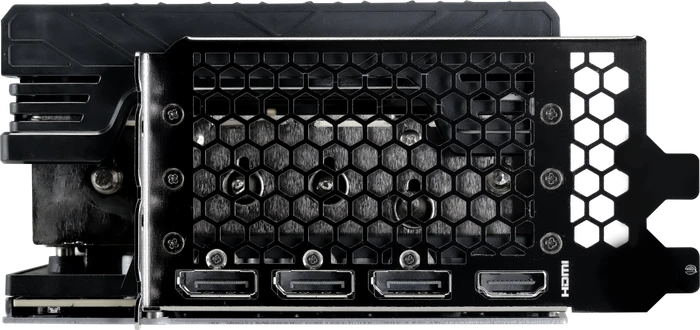
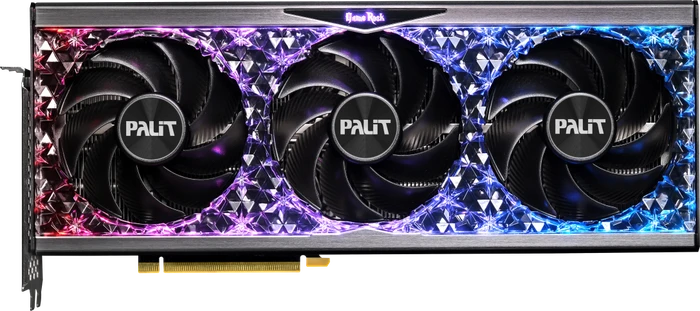

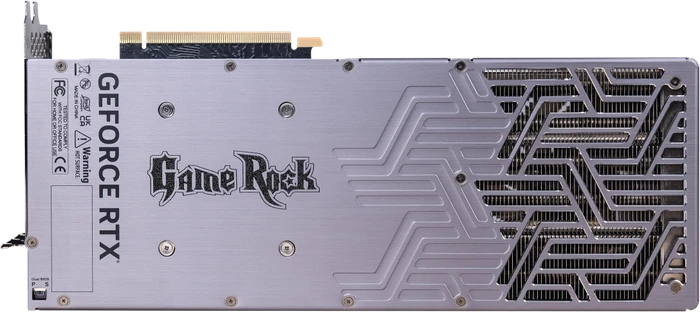
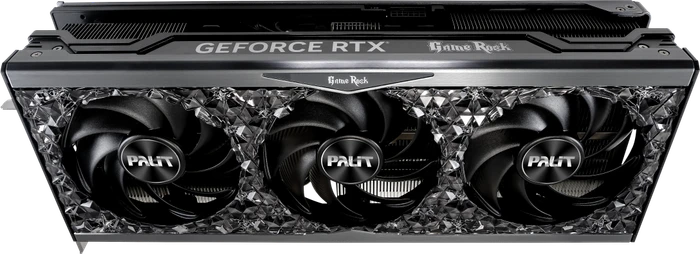
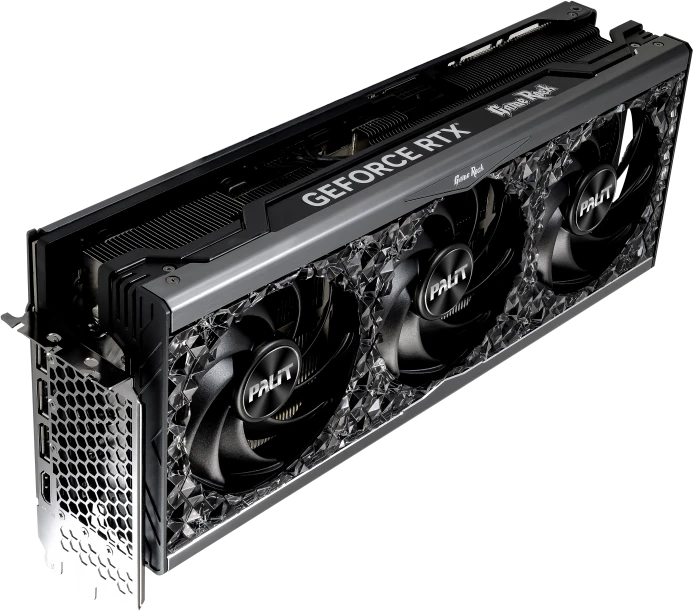
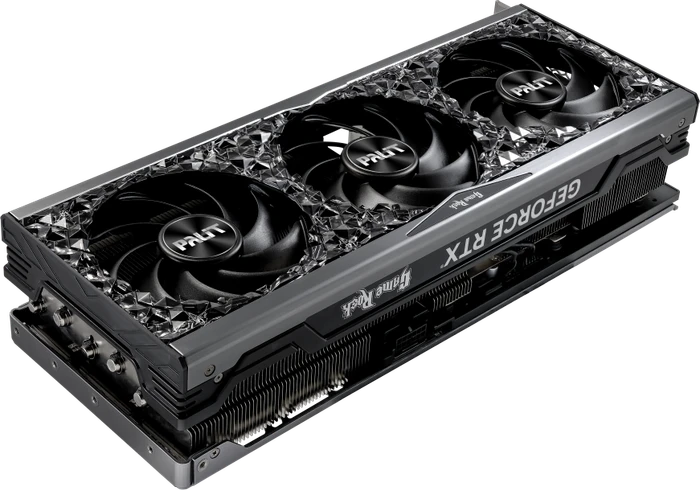

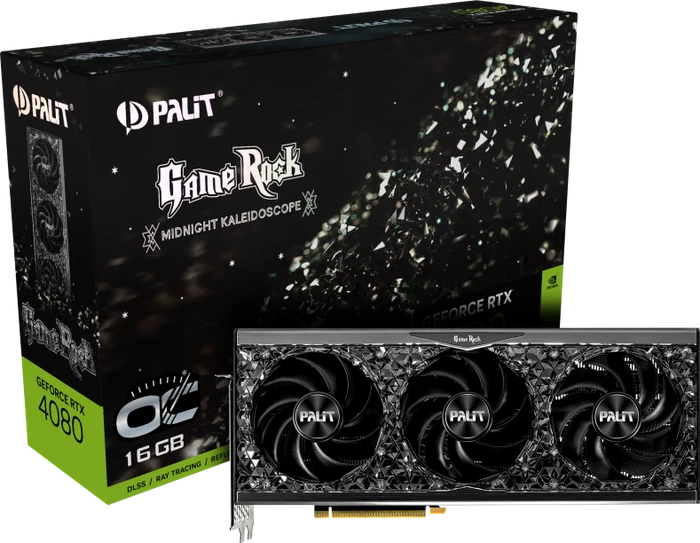
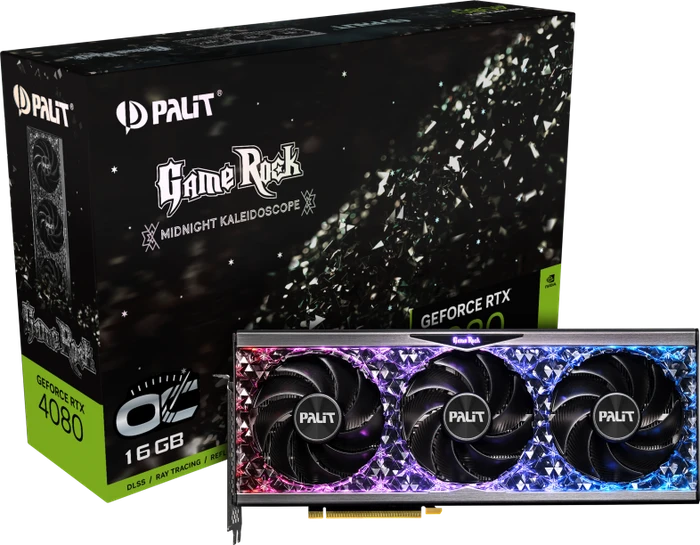


Palit GeForce RTX 4080 GameRock OC, 16GB GDDR6X, HDMI, 3x DP
NED4080S19T2-1030G
- Modell
- NVIDIA GeForce RTX 4080
- Speicher
- 16GB GDDR6X, 256bit, 22.4Gbps, 1400MHz, 717GB/s
- Takt Basis
- 2205MHz
- Takt Boost
- 2640MHz
- Übertaktung
- +135MHz Boost
- Kühlung
- 3x Axial-Lüfter (100mm) mit 0dB-Zero-Fan-Modus
- TDP/TGP
- 320W (NVIDIA), max. 340W (Palit)
- Stromanschlüsse
- 1x 12VHPWR (via Adapter: 3x 8-Pin PCIe)
- Anschlüsse
- 1x HDMI 2.1a, 3x DisplayPort 1.4a
- Anbindung
- PCIe 4.0 x16
- Besonderheiten
- Beleuchtung (RGB), Backplate, AI-Beschleunigung, RGB-Synchronisierung (3-Pin ARGB), Grafikkarten-Halterung
- Gesamthöhe
- Quad Slot (3.5 Slots)




Auf Lager
Kreditkarte, Lastschrift
GRATISVERSAND.
GRATISVERSAND.
Palit NED4080S19T2-1030G
Palit VGA RTX4080 16GB GameRock OC
Palit VGA RTX4080 16GB GameRock OC
Preis vom:
(Preis kann jetzt höher sein!)
(Preis kann jetzt höher sein!)
- Modell
- NVIDIA GeForce RTX 4080
- Speicher
- 16GB GDDR6X, 256bit, 22.4Gbps, 1400MHz, 717GB/s
- Takt Basis
- 2205MHz
- Takt Boost
- 2640MHz
- Übertaktung
- +135MHz Boost
- Kühlung
- 3x Axial-Lüfter (100mm) mit 0dB-Zero-Fan-Modus
- TDP/TGP
- 320W (NVIDIA), max. 340W (Palit)
- Stromanschlüsse
- 1x 12VHPWR (via Adapter: 3x 8-Pin PCIe)
- Anschlüsse
- 1x HDMI 2.1a, 3x DisplayPort 1.4a
- Anbindung
- PCIe 4.0 x16
- Besonderheiten
- Beleuchtung (RGB), Backplate, AI-Beschleunigung, RGB-Synchronisierung (3-Pin ARGB), Grafikkarten-Halterung
- Gesamthöhe
- Quad Slot (3.5 Slots)
- Abmessungen
- 329.4x137.5x71.5mm (LxBxH)
- Bauform
- PCIe-Karte (full height)
- Slotblende
- full height
- AI-Rechenleistung (dense)
- 390 TOPS (FP8), 195 TOPS (FP16)
- AI-Rechenleistung (sparse)
- 780 TOPS (FP8), 390 TOPS (FP16)
- GPU-Rechenleistung
- 50.59 TFLOPS (FP16), 50.59 TFLOPS (FP32), 0.79 TFLOPS (FP64)
- Chip-Daten
- Chip-Architektur
- NVIDIA Ada Lovelace (ab 2022/Q3)
- Chip-Bezeichnung
- AD103 (AD103-300-A1/AD103-301-A1)
- Chip-Ausbau
- 95% aktive Recheneinheiten (76/80 SM)
- Chip-Konfiguration
- 76SM (9728SP/304TMU/112ROP), 76 RT-Cores, 304 Tensor-Cores, 64MiB L2-Cache
- Chip-Fertigung
- TSMC N5P [NVIDIA 4N] (5nm)
- Chip-Größe
- 379mm², monolithisch, 45.9 Mrd. Transistoren
- Chip-Funktionen
- Raytracing (3rd Gen NVIDIA RTX), NVIDIA Tensor (4th Gen, 195 TOPS), HDCP 2.3
- Chip-Verwendung
- GeForce RTX 4080 SUPER
GeForce RTX 4080
GeForce RTX 4070 Ti SUPER
RTX 4500 Ada - API-Unterstützung
- DirectX 12 Ultimate (12_2) / CUDA 8.9 / Vulkan 1.3 / OpenCL 3.0 / OpenGL 4.6 / Shader Model 6.7
- Transcoding-Engine
- 2x NVENC (8th Gen, max. Sessions: 8), 1x NVDEC (5th Gen), Info
- Encoding
- AV1 (YUV 4:2:0), H.265 (4K YUV 4:2:0 / 4K YUV 4:4:4 / 4K Lossless / 8K / HEVC 10bit support / HEVC B Frame support), H.264 (YUV 4:2:0 / YUV 4:4:4 / Lossless)
- Decoding
- AV1 (8bit / 10bit), H.265 (8bit 4:2:0 / 10bit 4:2:0 / 12bit 4:2:0 / 8bit 4:4:4 / 10bit 4:4:4 / 12bit 4:4:4), H.264 (8bit 4:2:0), VP9 (8bit / 10bit / 12bit), VP8, VC-1, MPEG-2, MPEG-1
- Multi-GPU-Anbindung
- -
- Veröffentlichung (Serie)
- 20.09.2022, Verkaufsstart: 16.11.2022, UVP: 1.199 USD (NVIDIA)
- Grafik
- NVIDIA GeForce RTX 4080 - 16GB GDDR6X - Desktop
- Letztes Preisupdate
- Gelistet seit
- 15.11.2022, 19:08
-
Stand: 22.09.2022 .jpg [358.34 KB]
Laden ...
4 Bewertungen für Palit GeForce RTX 4080 GameRock OC, 16GB GDDR6X, HDMI, 3x DP
Teilen Sie uns Ihre Meinung zu Palit GeForce RTX 4080 GameRock OC, 16GB GDDR6X, HDMI, 3x DP mit oder lesen Sie die Bewertungen unserer Mitglieder, Experten und anderer Websites zu dessen Varianten.Laden ...
-
 igorslab.de: Palit GeForce RTX 4080 GameRock 16 GB im DLSS 3.0 Test – CPU-Limitierung ausgehebelt
Zum Start der NVIDIA GeForce RTX 4090 FE hatten wir uns zum ersten Mal mit dem Thema DLSS 3.0, und damit verbunden auch mit Frame Generation beschäftigt. An dieses Thema möchte ich heute nochmal anknüpfen und einen tieferen bzw. breiteren Blick auf NVIDIA’s neue „Wunderwaffe“ – zur Verlängerung von Benchmark-Balken – werfen. Ausgerechnet erst jetzt, zum Start der NVIDIA GeForce RTX 4080, stolpere ich während der Tests zur Palit GeForce RTX 4080 GameRock 16 GB über das Thema, dass man Frame Generation (ab jetzt nur noch FG genannt), mit allen verfügbaren Upscaling-Techniken (z.B. FSR oder auch XeSS) nutzen kann. Den Artikel findet ihr hier:

-
 kitguru.net: Palit RTX 4080 GameRock OC Review (translate)
RTX 4080 has been on the market for about three weeks now, and today we're looking at another partner card. Palit's RTX 4080 GameRock OC carries over the blinged-out design from the RTX 4090 GameRock OC we reviewed in October, while also featuring an adjustable power limit that can reach up to 400W, alongside dual-BIOS support. It certainly has a lot going for it on paper, but is it worth buying?

-
overclock3d.net: Palit GameRock RTX 4080 and 4090 Midnight Kaleidoscope OC Review (translate)
One thing we've never fully understood here at OC3D is brand loyalty. We can appreciate the simplicity or uniformity if you have all the components in your system from a single manufacturer. If for no other reason than you just need a single "control" application running. What we don't understand about it though is people who dismiss a certain brand or model simply because it's different. After all, every famous brand today was once new. We remember when Leadtek was the dominant name in graphics cards. This particular writer remembers the day the first Voodoo cards appeared and their eventual superseding by the Riva TNT.
-
guru3d.com: Palit GeForce RTX 4080 GameRock OC review (translate)
Aesthetically and functionally (in terms of how well it performs in games), it is a fantastic item, but the looks are subject to personal preference. What I care about most is how well something performs, how cool it stays, and how much it costs. On these fronts, Palit certainly delivers. As video outputs, you can choose between three DisplayPort and one HDMI. From a hardware and performance point of view, the GeForce RTX 4080 is downright fantastic. However, we live in challenging times, with a war close to the EU border, soaring energy prices, and life has gotten much harder and more expensive. That does make products like those shown today harder to defend; then again, we can't blame NVIDIA for the state of the world in 2022. We hope to see affordable low-energy products sooner rather than later from NVIDIA. As a piece of hardware all by itself, we can only applaud the 4080. TheADA GPU architecture can perform skillfully and excellently. A good chunk of extra shader cores brings in nearly 1.5x raw shader performance and even better Raytracing and Tensor core performance. Underlying technologies like Shader Execution Reordering (SER) and DLSS 3.0 make the new product and Series 4000 shine. The GeForce RTX 4080 offers staggering numbers. Starting at $1199, however, it's very expensive. If you have the wallet leniency and play games in Ultra HD or, at the very least, start at a monitor resolution of 2560x1440, we can't argue that it'll be a great addition towards any enthusiast-class gaming rig. Take Microsoft Flight Simulator 2020 combined with DLSS 3.0; you can fly at 100+ FPS in the highest resolutions. Cyberpunk at UHD with raytracing and DLSS3 quickly passes 100 FPS. This purebred Ultra HD card shines in that area, whether shading (regularly rendered games) or hybrid ray-tracing + DLSS3 is used. Compared to the mighty 4090, this still is a more economical product series offering massive performance. In closing, the RTX 4080 impresses and will keep you happy for years, but at a high cost and energy consumption. Never has built a new game PC been this expensive, but never have things been this fast. The sheer performance and novelty of these x-factor items astound us as hardware enthusiasts. Palit offers a rockin' product, alright. The default extra performance is only 3~4%. Still, if you are really into silent operation and are into the looks, it is a card we can recommend over the founder edition at a price premium of just $150

- Serienübergreifende Testberichte
-
techspot.com: Nvidia GeForce RTX 4080 Review - Fast, Expensive & 4K Gaming Capable All the Way (translate)Originalwertung: 90/100
The new GeForce RTX 4080 is clearly an impressive product, delivering on average 111 fps at 4K across the 13 games tested. That's a 20 to 30% increase over previous generation flagships.
-
-
-
-
-
-
-
-
-
-
-
-
-
-
-
-
-
-
-
-
-
-
-
-
Alle Angaben ohne Gewähr. Die gelisteten Angebote sind keine verbindlichen Werbeaussagen der Anbieter.
* Preise in Euro inkl. MwSt. zzgl. Versandkosten. Bei der Auswahl von "inkl. Versand" beinhaltet der dargestellte Preis die Kosten für den Versand. Die nicht angeführten Kosten in andere Länder entnimm bitte der Website des Händlers. Bei Sortierung nach einer anderen als der Landeswährung des Händlers basiert die Währungsumrechnung auf einem von uns ermittelten Tageskurs, der womöglich nicht mit dem im Shop angegebenen Preis exakt übereinstimmt. Bitte bedenke außerdem, dass die angeführten Preise periodisch erzeugte Momentaufnahmen darstellen und technisch bedingt teilweise veraltet sein können. Insbesondere sind Preiserhöhungen zwischen dem Zeitpunkt der Preisübernahme durch uns und dem späteren Besuch dieser Website möglich. Händler haben keine Möglichkeit die Darstellung der Preise direkt zu beeinflussen und sofortige Änderungen auf unserer Seite zu veranlassen. Der maßgebliche Preis für den Verkauf durch den Händler ist der tatsächliche Preis des Produkts, der zum Zeitpunkt des Kaufs auf der Website des Händlers steht.
Letzte Aktualisierung:
Der heise Preisvergleich ist ein Angebot in Kooperation mit der Preisvergleich Internet Services AG (geizhals.de). Die Redaktion von heise online hat keinen Einfluss auf das Angebot. Anfragen bitten wir daher direkt an geizhals.de zu stellen.
Fragen, Kritik und Anregungen bitte per E-Mail oder im Forum. Händler können sich hier anmelden. Alle Angaben ohne Gewähr.
Weitere Kontaktmöglichkeiten zu geizhals.de findst du hier oder telefonisch unter: +43 1 581 16 09