


(Die Abbildungen müssen nicht den tatsächlichen Produkten entsprechen)

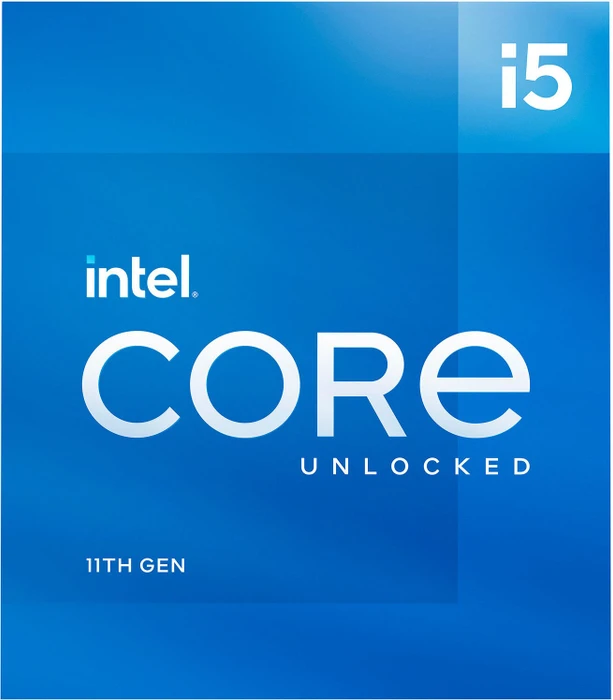
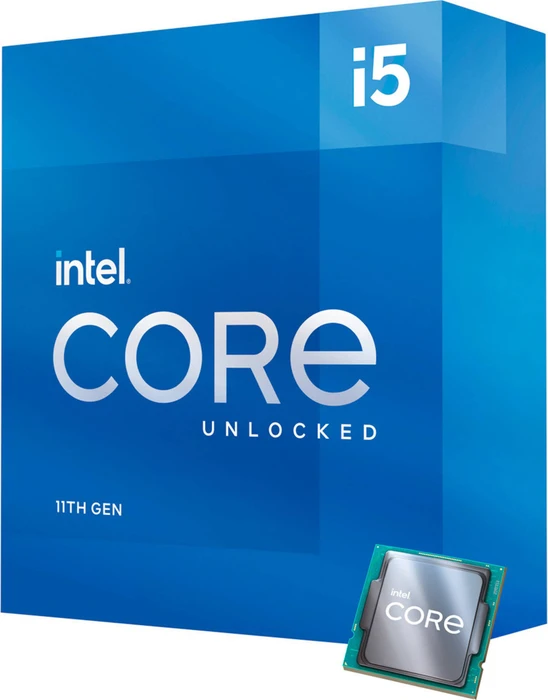


Intel Core i5-11600K, 6C/12T, 3.90-4.90GHz, boxed ohne Kühler
BX8070811600K
- Kerne
- 6 (6C)
- Threads
- 12
- Turbotakt
- 4.90GHz (Turbo Boost 2.0)
- Basistakt
- 3.90GHz
- TDP
- 125W, 95W cTDP-down (3.60GHz)
- Grafik
- Intel UHD Graphics 750
- Sockel
- Intel 1200 (LGA1200)
- Chipsatz-Eignung
- B560, H470, H510, H570, Q470, Z490, Z590, W480, W580
- Windows 11 Unterstützung
- ja
- Codename
- Rocket Lake-S (RKL-S) [ab 2021]
- Architektur
- Cypress Cove [ab 2021]
- Fertigung
- 14nm (Intel 14nm+++)




Auf Lager
Kreditkarte, Bankeinzug
siehe Shop.
siehe Shop.
Intel BX8070811600K
Intel Core i5-11600K Desktop Prozessor 6 Kerne bis zu 4,9 GHz entsperrt LGA1200 (Intel 500 Series & Select 400 Series Chipsatz) 125W
Intel Core i5-11600K Desktop Prozessor 6 Kerne bis zu 4,9 GHz entsperrt LGA1200 (Intel 500 Series & Select 400 Series Chipsatz) 125W
Preis vom:
(Preis kann jetzt höher sein!)
(Preis kann jetzt höher sein!)


7 Werktage
Vorkasse, PayPal, Rechnung € 9,90.
Lieferung in weitere Länder auf Anfrage.
Lieferung in weitere Länder auf Anfrage.
Intel BX8070811600K
Intel Core i5 11600K - 3,9 GHz - 6 Kerne - 12 Threads - 12 MB Cache - Sockel LGA1200 - Verpackung
Intel Core i5 11600K - 3,9 GHz - 6 Kerne - 12 Threads - 12 MB Cache - Sockel LGA1200 - Verpackung
Preis vom:
(Preis kann jetzt höher sein!)
(Preis kann jetzt höher sein!)
- Kerne
- 6 (6C)
- Threads
- 12
- Turbotakt
- 4.90GHz (Turbo Boost 2.0)
- Basistakt
- 3.90GHz
- TDP
- 125W, 95W cTDP-down (3.60GHz)
- Grafik
- Intel UHD Graphics 750
- Sockel
- Intel 1200 (LGA1200)
- Chipsatz-Eignung
- B560, H470, H510, H570, Q470, Z490, Z590, W480, W580
- Windows 11 Unterstützung
- ja
- Codename
- Rocket Lake-S (RKL-S) [ab 2021]
- Architektur
- Cypress Cove [ab 2021]
- Fertigung
- 14nm (Intel 14nm+++)
- L2-Cache
- 3MiB (6x 512KiB)
- L3-Cache
- 12MiB
- Speichercontroller
- Dual Channel DDR4, max. 128GB
- Speicherkompatibilität
- DDR4-3200 (PC4-25600, 51.2GB/s)
- ECC-Unterstützung
- nein
- SMT
- ja (Intel Hyper-Threading)
- Fernwartung
- ja (Intel vPro)
- Freier Multiplikator
- ja
- CPU-Funktionen
- AES-NI, AVX, AVX-512, AVX2, Boot Guard, DL Boost, EIST, GNA 2.0, Hyper-Threading (Intel), IPT, Idle States, Instruction Set 64bit (Intel 64), OS Guard, Optane Memory Support, SIPP, SSE4.1, SSE4.2, Secure Key, TXT, Thermal Monitoring, Turbo Boost 2.0, VT-d, VT-x, VT-x EPT, XD Bit
- Systemeignung
- 1 Sockel (1S)
- PCIe-Lanes
- 20x PCIe 4.0
- Interface
- DMI 3.0, 8GT/s (PCIe 3.0 x8)
- iGPU-Modell
- Intel UHD Graphics 750 (GT1)
- iGPU-Leistungsklasse
- Basis
- iGPU-Takt
- 0.35-1.30GHz
- iGPU-Einheiten
- 32EU/512SP
- iGPU-Architektur
- Xe-LP / Gen 12.1
- iGPU-Interface
- DP 1.4a (5120x3200@60Hz), eDP 1.4a (5120x3200@60Hz), HDMI 2.0b 18Gb/s (4096x2160@60Hz)
- iGPU-Funktionen
- 3x Display Support, Intel Clear Video HD, Intel InTru 3D, Intel Quick Sync Video, AV1 decode, H.265 encode/H.265 decode, VP9 encode/VP9 decode, DirectX 12 (12_1), OpenGL 4.60, OpenCL 3.00, max. 64GB iGPU-Speicher
- iGPU-Rechenleistung
- 1.33 TFLOPS (FP32)
- AI-Rechenleistung (NPU)
- N/A
- Lieferumfang
- ohne CPU-Kühler
- Einführung
- 2021/Q1 (30.3.2021)
- Segment
- Desktop
- Stepping
- B0 (Spec Code: SRKNU)
- Temperatur max.
- 100°C (Tjunction)
- Garantie
- 3 Jahre
- Letztes Preisupdate
- Gelistet seit
- 02.03.2021, 14:17
-
Stand: 17.03.2021 .pdf [100.40 KB]
-
Stand: 17.03.2021 .pdf [6.12 MB]
-
 cpu-monkey.com: Intel Core i5-11600K - CPU-Vergleich und Benchmarks
-
3dcenter.org: Launch-Analyse Intel Rocket Lake
-
computerbase.de: Intel Rocket Lake-S: Das sind die 19 Core i-11000 mit neuer Architektur in 14 nm
-
pcgameshardware.de: Intel Rocket Lake-S: Technische Daten offiziell, Tests folgen
-
cpu-monkey.com: Intel Core i5-11600K - CPU-Vergleich und Benchmarks
Laden ...
26 Bewertungen für Intel Core i5-11600K, 6C/12T, 3.90-4.90GHz, boxed ohne Kühler
Teilen Sie uns Ihre Meinung zu Intel Core i5-11600K, 6C/12T, 3.90-4.90GHz, boxed ohne Kühler mit oder lesen Sie die Bewertungen unserer Mitglieder, Experten und anderer Websites zu dessen Varianten.Laden ...
-
 kitguru.net: Intel Core i5-11600K Review (translate)Originalwertung: 8.5/10
Power draw is undeniably high, but the i5-11600K is much more attractive than its i9 sibling.

-

-
hardware-mag.de: Intel Core i9-11900K und i5-11600K im Test
Wie bereits im Verlauf des Artikels erwähnt, treffen wir bei der 11. Core-Generation für Desktop-Maschinen einige Bekannte wieder. Die als Rocket Lake-S getaufte Plattform samt 500er-Chipsatz-Serie setzt auf die Cypress Cove-Architektur, die aber eigentlich keine echte Neuerung ist, trotzdem aber 19% an IPC-Geschwindigkeit zulegen konnte. Eine schnellerer Speichercontroller und die Xe-Grafikeinheit von Tiger Lake sind die Keyfacts, die Rocket Lake zu einer Kombination aus Ice Lake (Prozessorarchitektur) und Tiger Lake (Grafikeinheit) machen. Im Gegenzug musste Intel jedoch von vormals zehn Kernen (i9-10900K) auf acht reduzieren, damit man Leistungsaufnahme und Wirtschaftlichkeit nicht aus den Augen verliert.

-
-
-
-
hardwareluxx.de: Die Rakete mit Fehlstart: Core i5-11600K, Core i7-11700K und Core i9-11900K im Test
Der durchaus etwas unorthodoxe Start de 11. Core-Generation für den Desktop findet heute sein Ende – aus Sicht der Käufer ist dies der Anfang, denn ab sofort werden die Prozessoren offiziell ausgeliefert und in Form des Core i5-11600K, Core i7-11700K und Core i9-11900K schauen wir uns die drei typischsten Modellvarianten dieser Serie an. Was leistet die Sunny-Cove-Architektur im Cypress-Cove-Gewand, gefertigt in 14 nm? In welchen Segmenten kann sich Intel gegen AMDs Ryzen-5000-Serie durchsetzen? Welche Neuerungen bietet der überarbeitete Speichercontroller? Auf all diese Fragen versuchen wir eine Antwort zu finden.

-
pcgameshardware.de: Intel Core i9-11900K, i7-11700K und i5-11600K im Test: Auf dem Thron ist nur Platz für einen Prozessor
Eine neue Architektur, ein neuer Speichercontroller und eine neue IGP: Rocket Lake S ist gelandet und liefert bis zu acht Kerne mit 5,3 GHz, PCI-Express 4.0, die neue 500er-Plattform und schickt sich an, die Leistungskrone zurückzugewinnen. Ob der Angriff auf AMDs Ryzen 5000 gelingt, oder ob die Konkurrenz wohlweislich in ein effektives Raketenabwehrsystem investiert hat, lesen Sie jetzt in unserem Test.

-
computerbase.de: Intel Core i9-11900K & i5-11600K „Rocket Lake-S“ im Test
Mit der 11. Generation Core-CPUs für Desktop-PCs schickt Intel die 14-nm-Fertigung ein letztes Mal in den Ring. Rocket Lake-S portiert die bereits von Ice Lake bekannte neue CPU-Architektur von 10 auf 14 nm und würzt sie mit bis zu acht Kernen und sehr hohem Takt. Dennoch hat es das Resultat nicht nur gegen Ryzen 5000 schwer.

-
-
thinkcomputers.org: Intel Core i5-11600K Processor Review (translate)
When we took a look at the Core i9-11900K we were a little disappointed, mainly for the fact that it just could not compete against AMD and really did not feel like a flagship product. With the mid-range Core i5-11600K Intel can redeem themselves at least a little bit. Getting straight to performance the Core i5-11600K is a nice improvement over the Core i5-10600K (as it should be), but still falls behind AMD’s Ryzen 5 5600X in most of our tests. Again, when we see an Intel launch (after an AMD launch) we expect to see Intel come out on top and that is not the case here. Honestly the performance difference is not all that much between AMD and Intel here and in most cases really wouldn’t be all that noticeable. Both chips are 6-core, 12-thread parts, but AMD is still able to beat it out, even though its boost clock is 300 MHz slower. It definitely shows that AMD has done a lot with their Zen 3 architecture. When it comes to gaming performance is very close, but in titles like Borderlands 3 and Far Cry New Dawn Intel processors were are the top of our charts.
-
-
hexus.net: Review: Intel Core i5-11600K (translate)
The Core i5-11600K certainly isn't an innately bad processor, as evidenced by the benchmarks, particularly against comparable AMD chips, but its $262 (£250) street price feels too close to the bottom of the more powerful Core i7 / Ryzen 7 ranges for it to be a brilliant value play. K-series CPUs oftentimes find themselves in tough spots like these, but the very fact this chip gets pretty high on our bang4buck charts is testament to Intel's general progress for this generation. As a one-hit range where value is equally as important as performance, with most pairing the chip with a discrete gaming card, it makes more sense to look at the Core i5-11400F ($157, £145) alongside an inexpensive B560 board. The duo costs the same as the Core i5-11600K alone and sacrifices little in the way of day-to-day horsepower. Heck, even a last-gen Core i5-10400F and B460 fits the value bill nicely... until Alder Lake arrives.
-
-
overclockers.com: Intel i9-11900K and i5-11600K Review: A Stopgap Until 10nm (translate)
In the end, the Rocket Lake CPUs stick it to AMD clock speed-wise and single-threaded performance with some very impressive boost speeds reaching up to 5.3 GHz. They also bring with them a new architecture with new features and a much-needed IPC improvement. Still, in most tests, these are the fastest CPUs Intel has put out to date. Whether or not the price is worth it for the gains is up to the buyer, but Intel has put out some solid-performing CPUs for the mainstream platform.
-
hothardware.com: Intel Core i9-11900K And i5-11600K Review: Rocket Lake-S Liftoff (translate)
After disclosing some architecture details a few months back, and revealing the initial line-up of Rocket Lake-S based 11th Gen processors a few weeks ago, Intel is officially launching its latest family of mainstream desktop CPUs today, along with some new chipsets to enable all of their features.
-
overclock3d.net: Intel 11th Gen Core i5-11600K and Core i9-11900K Review (translate)
Finally, after what feels like an age the 11th Generation Rocket Lake Intel processors are upon us, designed for the Z590 chipset which finally brings the PCI Express 4.0 technology to the Intel platform. Whilst there are a few other elements which might be of interest to niche audiences, what it all boils down to is Intel with PCIe 4.0. Has it been worth the wait? Despite both being 11th Generation the Core i5-11600K and Core i9-11900K are pretty different in how they go about things, particularly when you compare them to their 10th Generation predecessors. Because of this we'll wrap them up individually.
-
guru3d.com: Intel Core i5-11600K processor review (translate)
Much like the Core i9 11900K review, we face a similar conclusion. We wish we had a clean-cut simple conclusion and answer for you in your processor options, but never has there been so much competition on the desktop processor front to hand out a preference to either brand. However, comparing 11600K in relation to 5600X, the latter would solely get my choice based on TDP and heat levels alone. Looking at it from raw performance, the 5600X wins almost all single- and multi-threaded applications; for gaming, that dynamic changes, albeit it has to be stated, some titles just like Intel processor better some prefer AMD these days. The performance will vary significantly per motherboard, we therein many factory tweaks can be found. We'll demonstrate that more specifically with our upcoming Z590 reviews. Ultimately the Core i5 11600K is a feisty and a good gaming processor to pair with any modern-age graphics card. Also, with Rocket Lake, Intel brings the platform much-desired PCIe Gen 4.0 lanes, of which four you can utilize for a super-fast NVMe SSD. Aside from double DMI link bandwidth and USB 3.2 Gen 2x2 (SuperSpeed USB 20Gbps), there is little gain from Z590 overall though. A multitude of Z490 motherboards will even support PCIe Gen 4.0 as well after a BIOS update. How important the rest is to you is for you to decide. Upgrading from Comet lake (Gen10) is not advised; even upgrading from a Coffee Lake (Gen9) remains trivial.

-
-
techpowerup.com: Intel Core i5-11600K Review (translate)
The Core i5-11600K is Intel's mid-range entry using the Rocket Lake architecture. Our review confirms that it is a great alternative to AMD's overpriced Ryzen 5 5600X, offering similar performance at almost $100 less. The 11660K is also fast enough to compete with last generation's 8-core i7-10700K.

-
eurogamer.net: Intel Core i9 11900K and Core i5 11600K review: calm before the storm (translate)
It's finally here - Intel's 11th-generation of desktop CPUs. Codenamed Rocket Lake S, these chips aim to re-take the gaming performance crown from AMD, whose recently released Ryzen 5000 processors showed incredible gen-on-gen gains. Intel is making similar claims, touting up to a 19 per cent improvement to single core speeds, but does 11th-gen deliver? To answer this, we've been testing the flagship Core i9 11900K and mid-range Core i5 11600K frantically for the past week, in a new suite of recent games that can trip up even flagship CPUs.
-
eteknix.com: Intel 11th Gen i5-11600K & i9-11900K Review (translate)
It is finally Intel’s 11th Gen CPU launch day! Most people are fully aware these chips have been coming for some time so I am still not sure why Intel likes to pretend it’s a big secret. From leaked benchmarks to German retailers selling CPUs early, it almost feels as if we are late to the party, even though it is only now the official launch. The new CPUs are bringing us some new features, some that Intel fans have been waiting a good while for! The introduction of PCIe 4.0 was some time ago but we are only getting our first look at it from Intel’s perspective now. Blistering fast storage speed is something we can all get excited about and it is about time!
- Serienübergreifende Testberichte
-
-
-
-
Alle Angaben ohne Gewähr. Die gelisteten Angebote sind keine verbindlichen Werbeaussagen der Anbieter.
* Preise in Euro inkl. MwSt. zzgl. Versandkosten. Bei der Auswahl von "inkl. Versand" beinhaltet der dargestellte Preis die Kosten für den Versand. Die nicht angeführten Kosten in andere Länder entnimm bitte der Website des Händlers. Bei Sortierung nach einer anderen als der Landeswährung des Händlers basiert die Währungsumrechnung auf einem von uns ermittelten Tageskurs, der womöglich nicht mit dem im Shop angegebenen Preis exakt übereinstimmt. Bitte bedenke außerdem, dass die angeführten Preise periodisch erzeugte Momentaufnahmen darstellen und technisch bedingt teilweise veraltet sein können. Insbesondere sind Preiserhöhungen zwischen dem Zeitpunkt der Preisübernahme durch uns und dem späteren Besuch dieser Website möglich. Händler haben keine Möglichkeit die Darstellung der Preise direkt zu beeinflussen und sofortige Änderungen auf unserer Seite zu veranlassen. Der maßgebliche Preis für den Verkauf durch den Händler ist der tatsächliche Preis des Produkts, der zum Zeitpunkt des Kaufs auf der Website des Händlers steht.
Letzte Aktualisierung:
Der heise Preisvergleich ist ein Angebot in Kooperation mit der Preisvergleich Internet Services AG (geizhals.de). Die Redaktion von heise online hat keinen Einfluss auf das Angebot. Anfragen bitten wir daher direkt an geizhals.de zu stellen.
Fragen, Kritik und Anregungen bitte per E-Mail oder im Forum. Händler können sich hier anmelden. Alle Angaben ohne Gewähr.
Weitere Kontaktmöglichkeiten zu geizhals.de findst du hier oder telefonisch unter: +43 1 581 16 09