


(Die Abbildungen müssen nicht den tatsächlichen Produkten entsprechen)
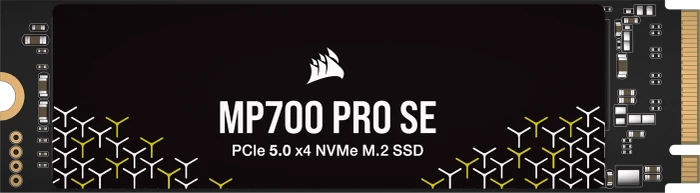


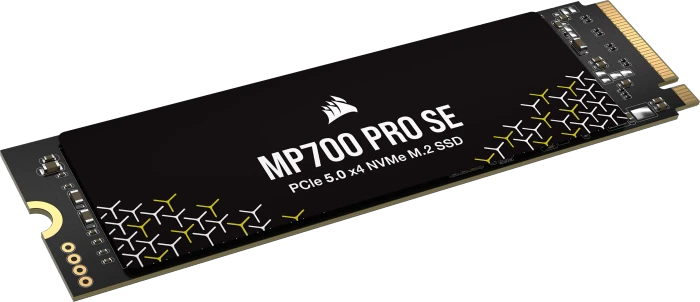
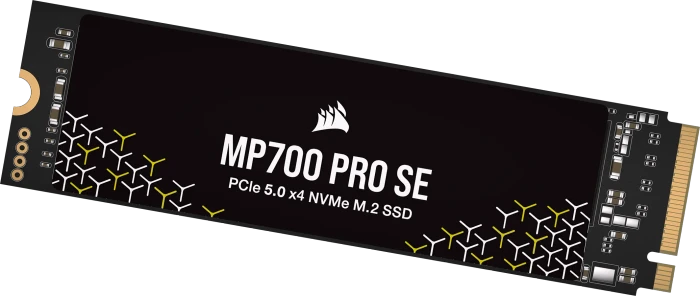
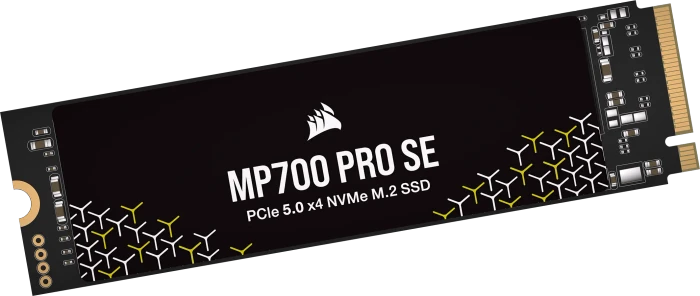
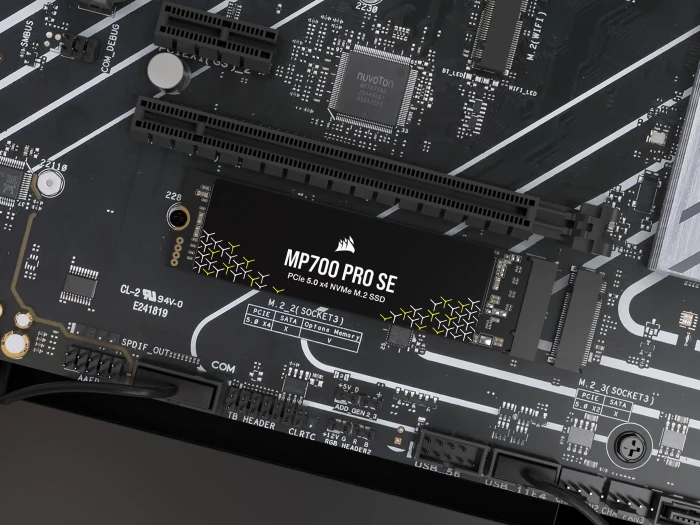
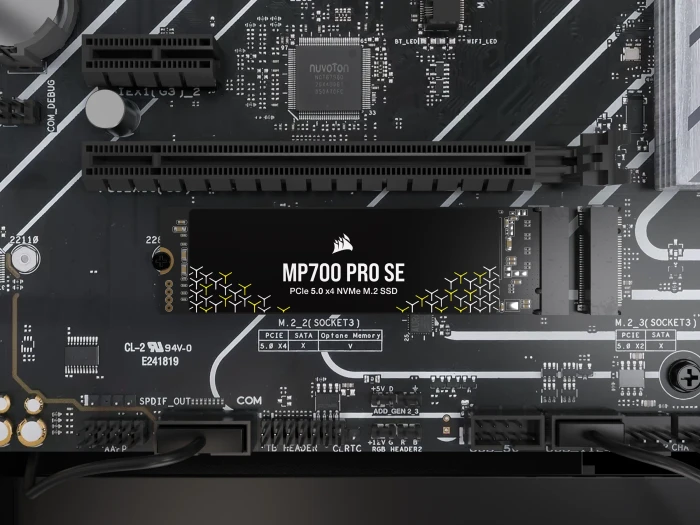
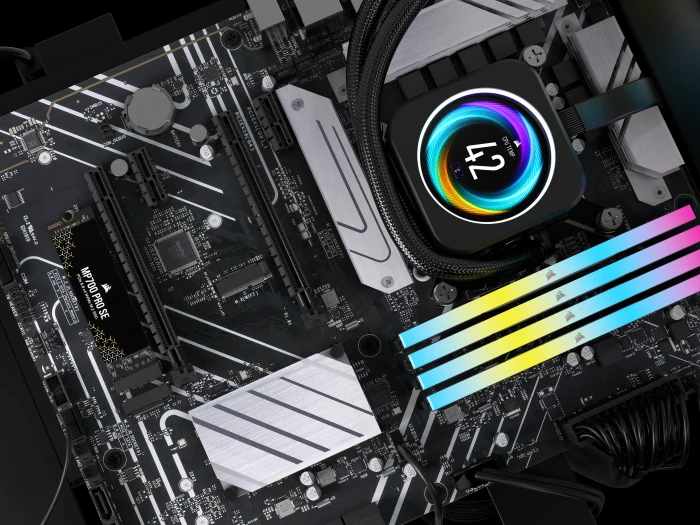
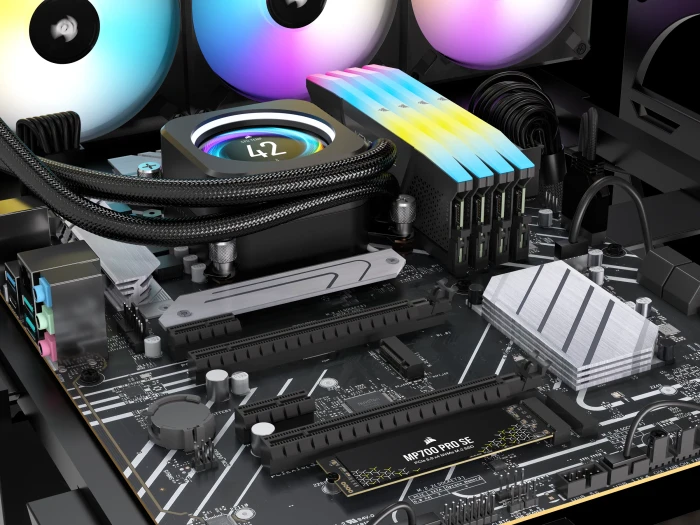
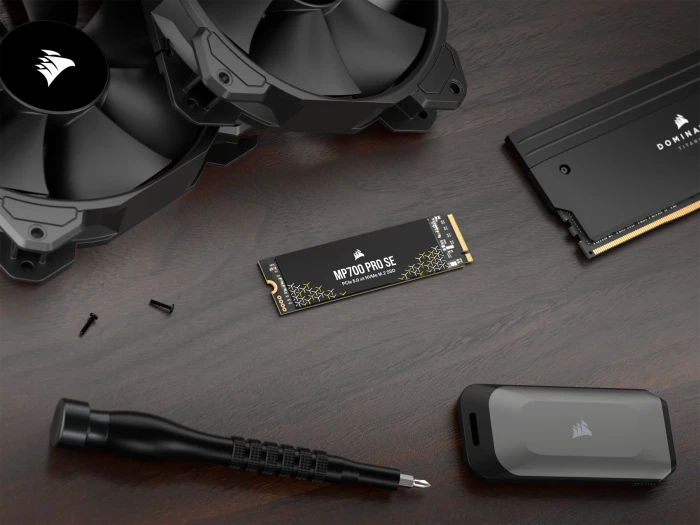
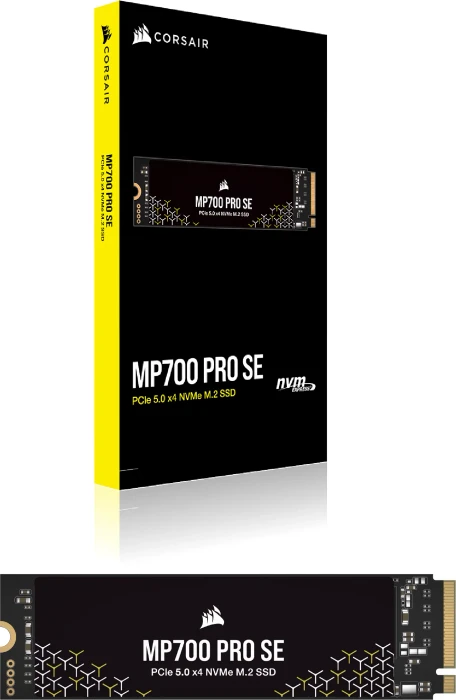
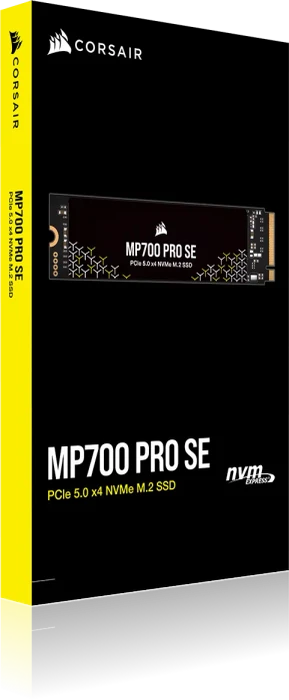


Corsair Force Series MP700 PRO SE 4TB, M.2 2280 / M-Key / PCIe 5.0 x4
CSSD-F4000GBMP700PNHS
- Kapazität
- 4TB (entspricht ca. 3725.29GiB bzw. 3.64TiB, weiterführende Informationen)
- Bauform
- Solid State Module (SSM)
- Formfaktor
- M.2 2280
- Schnittstelle
- M.2/M-Key (PCIe 5.0 x4)
- Lesen
- 14000MB/s
- Schreiben
- 12000MB/s
- IOPS 4K
- 1700K lesend, 1600K schreibend
- Speichermodule
- 3D-NAND TLC
- TBW
- 3000TB, entspricht 750 Schreibzyklen (TBW/Kapazität)
- Zuverlässigkeitsprognose
- 1.6 Mio. Stunden (MTBF)
- Controller
- Phison PS5026-E26, 8 Kanäle
- DRAM-Cache
- ja, 2GB LPDDR4




Auf Lager
Kreditkarte, Lastschrift
GRATISVERSAND.
GRATISVERSAND.
Corsair CSSD-F4000GBMP700PNHS
Corsair MP700 PRO SE 4 TB M.2 PCIe Gen5 x4 NVMe 2.0 SSD - M.2 2280 - Bis zu 14.000 MB/s Sequenzielles Lesen - Hochdichter TLC NAND - Schwarz
Corsair MP700 PRO SE 4 TB M.2 PCIe Gen5 x4 NVMe 2.0 SSD - M.2 2280 - Bis zu 14.000 MB/s Sequenzielles Lesen - Hochdichter TLC NAND - Schwarz
Preis vom:
(Preis kann jetzt höher sein!)
(Preis kann jetzt höher sein!)
- Kapazität
- 4TB (entspricht ca. 3725.29GiB bzw. 3.64TiB, weiterführende Informationen)
- Bauform
- Solid State Module (SSM)
- Formfaktor
- M.2 2280
- Schnittstelle
- M.2/M-Key (PCIe 5.0 x4)
- Lesen
- 14000MB/s
- Schreiben
- 12000MB/s
- IOPS 4K
- 1700K lesend, 1600K schreibend
- Speichermodule
- 3D-NAND TLC
- TBW
- 3000TB, entspricht 750 Schreibzyklen (TBW/Kapazität)
- Zuverlässigkeitsprognose
- 1.6 Mio. Stunden (MTBF)
- Controller
- Phison PS5026-E26, 8 Kanäle
- DRAM-Cache
- ja, 2GB LPDDR4
- Protokoll
- NVMe 2.0
- Datenschutzfunktionen
- 256bit AES
- Leistungsaufnahme
- 11.5W (Betrieb), 144mW (Leerlauf), 85mW (Schlafmodus)
- Abmessungen
- 80x22x2.4mm (ohne Kühlkörper)
- Garantie
- 5 Jahre
- Letztes Preisupdate
- Gelistet seit
- 22.04.2024, 16:14
Laden ...
Bewertung für Corsair Force Series MP700 PRO SE 4TB, M.2 2280 / M-Key / PCIe 5.0 x4
Teilen Sie uns Ihre Meinung zu Corsair Force Series MP700 PRO SE 4TB, M.2 2280 / M-Key / PCIe 5.0 x4 mit oder lesen Sie die Bewertungen unserer Mitglieder, Experten und anderer Websites zu dessen Varianten.Laden ...
-
 igorslab.de: Corsair MP700 PRO SE PCIe 5.0 NVMe M.2 SSD im Test: Schnell, aber eine gute Kühlung ist PflichtOriginalwertung: 4.5/5
Lassen wir mal den Preis von den 720 Euro UVP (leider hatte ich bis jetzt Straßenpreise) außen vor, der sich sicher nach der tatsächlichen Marktverfügbarkeit später noch anpassen wird, dann ist auch die Corsair MP700 Pro SE vielleicht exakt das, was momentan für den Endanwender (Gamer oder Creator) technisch noch mit normalem Aufwand realisierbar ist. Es müssen ja nicht gleich 4 TB sein, denn 2 TB reichen meist auch. Es gibt schon diverse Exemplare in dieser Leistungsklasse, aber es ist Corsair gelungen, ein weiteres konkurrenzfähiges Produkt zu platzieren, das vor allem thermisch stabil läuft, wenn man einen passenden Kühler verwendet. Allerdings zeigt der Vergleich zur MSI M580 Frozr auch, dass die gleichschnelle SSD MIT Kühler über 100 Euro günstiger ist als die absolut baugleiche MP700 Pro SE von Corsair OHNE Kühler! Man kann solch eine SSD all denen empfehlen, die auf der Jagd nach dem letzten Quäntchen Performance sind, die genügend Platz auf dem Motherboard finden und denen die 5 Jahre Garantie ein wenig die Zweifel nehmen, wie lange der Controller und der Micron NAND mit dem Wechsel von pSLC- und TLC-Modus verlustfrei klarkommen. Dass es hier auch am Zusammenspiel von Controller und Flash-Speicher liegt, ist ja kein Geheimnis. Nur macht Micron das ja nicht erst seit gestern und die TBW-Angaben sind immer so eine Sache. Ich habe eine Intel-SSD z.B. erst nach mehreren Petabytes geschrottet, obwohl sie laut Specs schon lange tot gewesen sein müsste. Fazit: Es ist ein gutes Produkt, aber im Vergleich zu den Mitbewerbern extrem überteuert, wenn man die UVP ansetzt. Man wird also, wenn es die MP700 Pro SE sein soll, besser noch etwas abwarten, ob sich der Straßenpreis dann noch nach unten korrigiert. Aber für 720 Euro fehlen mir einfach die Argumente. Ja, das letzte Bisschen an Performance ist nun mal wie immer auch am teuersten, nur wissen wir ja, dass die Mitbewerber hier die identische Technik deutlich günstiger anbieten. Wer schön, schnell und dabei auch noch leise sein, der muss nun mal eben auch leiden und sollte vor allem auch die Preise vergleichen. Oder murrend bezahlen und sich dann bitte nicht beschweren.

-


-
tweaktown.com: Corsair MP700 Pro SE 4TB SSD Review - As Fast as They Come (translate)Originalwertung: 98/100
It's the highest-performing 4TB SSD we've tested to date.
-
tomshardware.com: Corsair MP700 Pro SE SSD review: New and improved (translate)Originalwertung: 4.5/5
The Corsair MP700 Pro SE is Corsair’s second generation PCIe 5.0 SSD, this time making full use of the interface. It’s faster and Corsair offers multiple SKUs to keep everybody happy, but the drive breaks no new barriers.
-
tweakpc.de: Corsair MP700 PRO SE 4TB SSD im Test
Enthusiasten, welche die maximale Performance wollen, mussten bei PCs schon immer tief in die Tasche greifen und das ist bei SSDs nicht anders. Mit der Corsair MP700 Pro SE in der 4 TB Version bekommt man aktuell das schnellste was der Comsumer-SSD-Markt zu bieten hat. Insbesondere Anweder die extrem viele und große Dateien schreiben können natürlich von einer solchen SSD profitieren.

-
hardwareluxx.de: Corsair MP700 PRO SE im Test: Verbesserter PCIe5-Erstling
Mit der neuen Corsair MP700 PRO SE testen wir heute eine neue Vertreterin der aktuellen PCIe5-Generation. Mit einer Lesegeschwindigkeit von bis zu 14 GB/s verspricht Corsair maximale Performance bei gleichzeitig optimierter Hitzeentwicklung. Wie gut das im Alltag klappt und ob die MP700 PRO SE die Spitze unserer Vergleichslisten erklimmen kann, prüfen wir mit unserem Test.

-

-
thessdreview.com: Corsair MP700 Pro SE Gen5 4TB SSD Review – High Performance Meets High Capacity (translate)
The Corsair MP700 Pro SE SSD hits a grand slam with 14GB speeds, 4TB high capacity and 5-year limited warranty. Definitely an SSD for those high end applications.
-
-
storagereview.com: Corsair MP700 PRO SE Gen5 SSD Review (4TB) (translate)
In our performance testing, the MP700 PRO SE did extremely well, usually surpassing the other drives in the areas it got to stretch its legs. That’s not to say it was completely undisputed, but it varied by workload. This is a nice progressive step for the Phison-powered drive, it’s just a shame this “better” NAND wasn’t available at the initial launch. Having so many drives, especially two Gen5 SSDs launched less than half a year from one another, can be confusing to consumers. In the end, the MP700 PRO SE helps to highlight what Gen5 SSDs can look like for consumers. The radiator heatsink and liquid loop might be excessive, but they do add a visual panache for those who enjoy such things. Most users will be better off saving a few bucks and going with a Gen4 drive for gaming systems and PCs, but for those who want to wring every last drop of performance out of their rigs, the Corsair MP700 PRO SE does stand as a willing deputy for the task.
-
techpowerup.com: Corsair MP700 Pro SE 4 TB Review (translate)
With the MP700 Pro SE, Corsair is releasing a 14 GB/s PCIe Gen 5 SSD, which offers incredible performance right up to the limit of the new Gen 5 interface. These speeds are only possible thanks to Micron 232-layer NAND chips running at 2400 MT/s. The 10 GB/s and 12 GB/s Gen 5 SSDs use the same NAND, but at lower speeds of 1600 MT/s and 2000 MT/s. Unlike many other vendors, Corsair isn't bundling a heatsink with their drive, which isn't completely unreasonable, because there's probably a lot of people that will use their motherboard's cooling solution anyway. Just like on all other Gen 5 SSDs in the market, the MP700 Pro SE uses the Phison E26 controller. Synthetic performance results of the MP700 Pro SE are impressive, and as expected, sequential read and write is increased, but we noticed a small performance regression in sequential mixed. We can confirm that Corsair's "up to 14 GB/s" claim is accurate (for sequential writes at QD8 and higher). Marketing materials for Gen 5 all focus on blazing fast sequential transfers. The reason is that random IO performance is virtually identical to the results of PCIe Gen 4 drives, like the Phison E18-based Kingston KC3000. Phison has a long history of optimizing their controllers for typical synthetic reviewer workloads on an empty drive. That's why it's important to also include real-life testing. We're even running those tests with the drives filled to 85% capacity, not empty. This approach puts additional strain on the various algorithms and the SLC cache, just like in real-life. With this review, we're introducing our new 2024 SSD Test Suite, which updates the game selection and adds new tests like AI and Git on a new hardware platform with native Gen 5 slot. Here the Corsair MP700 Pro SE does excellently and comes out as the fastest SSD we've ever tested. Compared to the Corsair MP700 Pro (which uses the same hardware, but with slower 12 GB/s maximum), the performance uplift is around 2%, which is expected, because very few real-life workloads scale with such high sequential transfer rates. Compared to Gen 4 SSDs, the performance uplift is around 5-10%, which is a repeat of what we've seen from the first Gen 4 drives, when compared to Gen 3 SSDs. Corsair's drive comes with an SLC cache size of 30%, or 400 GB, which is enough to soak up nearly all bursts of write activity, and it has the benefit that sustained rates are much better. First-gen PCIe 5.0 SSDs had a bigger SLC cache of 600 GB, but got penalized when that cache was full, so they filled their whole capacity at an average of 1.5 GB/s, whereas Corsair's new SSD more than doubles that to 3.3 GB/s—very impressive. Our power consumption testing confirms that the Corsair MP700 Pro SE really uses a lot of power. We've measured up to 11 W, which is essentially 50% more than what we've seen on Phison's E18 Gen 4 controller. Hitting 11 W is quite rare though, you should rather plan with 5-6 W during typical loads, which is still a lot for an M.2 SSD. Of course, you're getting higher performance at the same time, but our numbers show that even when running at only 1 or 2 GB/s, the power consumption is still high. It seems that once the controller goes out of idle, it will always use 4 W at least, no matter how little actual work it does (same as earlier Phison E26 models that we've tested). Read operation energy efficiency appears lower, because in our testing, the sequential reads are limited to 6 GB/s (same as in the synthetic read workload). According to Corsair, the MP700 Pro SE 4 TB will be priced at $635, there's only a 4 TB model available at this time. No doubt, the speeds are impressive, and 4 TB is tons of space, but that's a lot of money for just storage. I'm not sure how Corsair came up with $635, because the Crucial T705 4 TB, which uses the exact same hardware as the MP700 Pro SE is currently listed online for $543—almost $100 cheaper! I asked Corsair and their reply was that $635 is the MSRP and the actual street price will be lower than that. If you can live with "only" 12 GB/s, then you could grab a Crucial T700 for $400. Still, even $400 is A LOT of money for a 4 TB SSD, but the M.2 options are limited, especially in this capacity range. An interesting option is the WD Black SN850X 4 TB, which sells for $320, the Samsung 990 Pro 4 TB for $310, or the Lexar NM790 4 TB for $250, all of which are considerably less expensive, yet offer very similar performance using a PCIe Gen 4 interface.

Alle Angaben ohne Gewähr. Die gelisteten Angebote sind keine verbindlichen Werbeaussagen der Anbieter.
* Preise in Euro inkl. MwSt. zzgl. Versandkosten. Bei der Auswahl von "inkl. Versand" beinhaltet der dargestellte Preis die Kosten für den Versand. Die nicht angeführten Kosten in andere Länder entnimm bitte der Website des Händlers. Bei Sortierung nach einer anderen als der Landeswährung des Händlers basiert die Währungsumrechnung auf einem von uns ermittelten Tageskurs, der womöglich nicht mit dem im Shop angegebenen Preis exakt übereinstimmt. Bitte bedenke außerdem, dass die angeführten Preise periodisch erzeugte Momentaufnahmen darstellen und technisch bedingt teilweise veraltet sein können. Insbesondere sind Preiserhöhungen zwischen dem Zeitpunkt der Preisübernahme durch uns und dem späteren Besuch dieser Website möglich. Händler haben keine Möglichkeit die Darstellung der Preise direkt zu beeinflussen und sofortige Änderungen auf unserer Seite zu veranlassen. Der maßgebliche Preis für den Verkauf durch den Händler ist der tatsächliche Preis des Produkts, der zum Zeitpunkt des Kaufs auf der Website des Händlers steht.
Letzte Aktualisierung:
Der heise Preisvergleich ist ein Angebot in Kooperation mit der Preisvergleich Internet Services AG (geizhals.de). Die Redaktion von heise online hat keinen Einfluss auf das Angebot. Anfragen bitten wir daher direkt an geizhals.de zu stellen.
Fragen, Kritik und Anregungen bitte per E-Mail oder im Forum. Händler können sich hier anmelden. Alle Angaben ohne Gewähr.
Weitere Kontaktmöglichkeiten zu geizhals.de findst du hier oder telefonisch unter: +43 1 581 16 09